Gymnasium wall padding is designed to protect athletes from hard walls and other surfaces during indoor sports and activities. But like any athletic facility equipment, it can wear out over time.
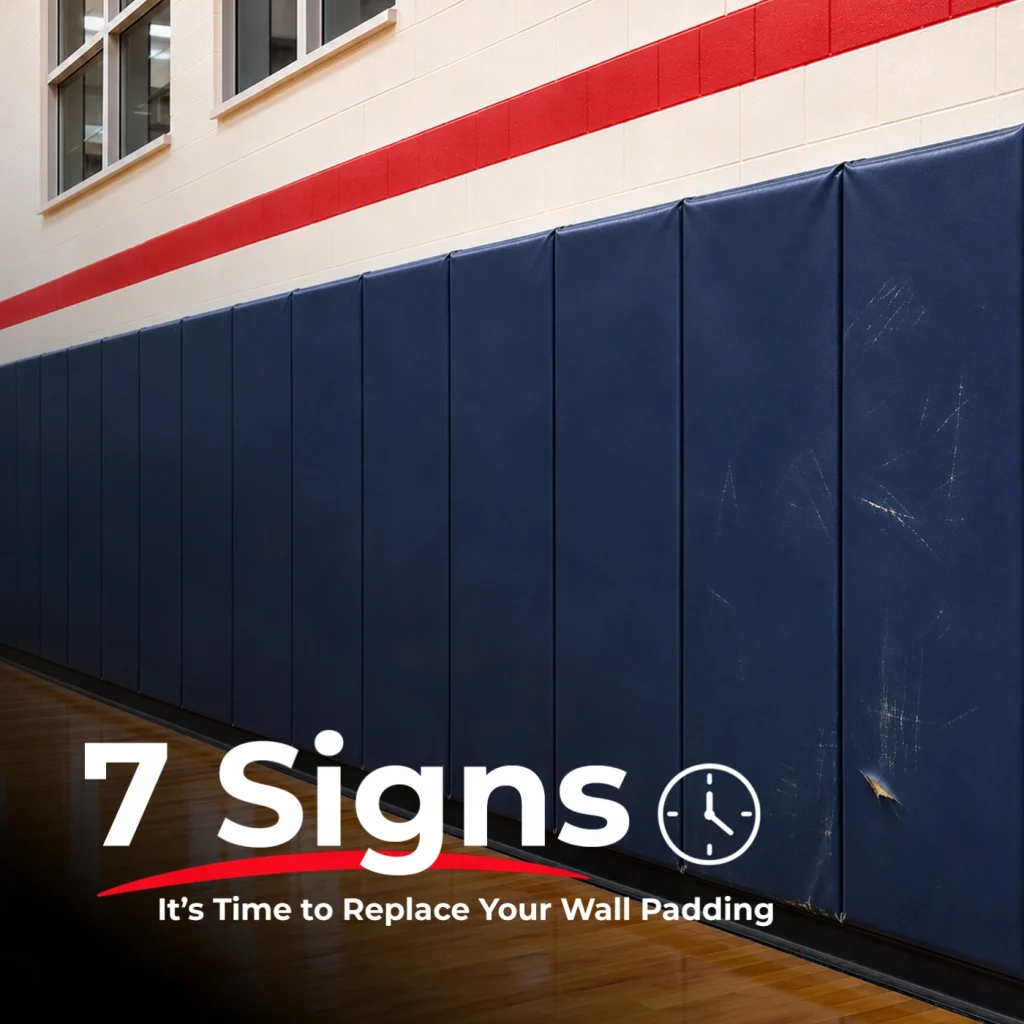
Years of basketball games, volleyball matches, wrestling practices, and daily physical education classes can take a toll on wall padding. Vinyl coverings can crack, foam can lose its shape, and mounting hardware can become loose. When these problems go unnoticed, your gymnasium may no longer have the level of wall protection it was designed to provide.
For school administrators, athletic directors, and facility managers, knowing when to replace gym wall padding is an important part of maintaining a safe athletic facility.
So, what should you look for?
Here are seven signs that your gymnasium wall padding may need to be repaired or replaced.
1. The Vinyl Covering Is Cracked, Torn, or Peeling
The vinyl covering protects the foam inside wall padding. It also gives the padding a smooth, finished surface that can handle everyday use in a busy gymnasium. Over time, repeated contact, cleaning, and general wear can cause the vinyl to break down.
During an inspection, look for:
- Cracks or splits in the vinyl.
- Tears, holes, or punctures.
- Peeling seams or separated edges.
- Brittle or stiff areas that no longer flex normally.
Minor surface damage may be repairable, depending on the product and the extent of the problem. However, large tears and damaged seams can expose the foam underneath to dirt, moisture, and additional wear.
If the vinyl can no longer protect the padding inside, it may be time to replace the affected panels.
2. The Foam Is Exposed, Crumbling, or Damaged
The foam inside gymnasium wall padding is responsible for absorbing impact. If the foam becomes damaged, the pad may no longer provide the intended level of protection.
Exposed foam is often a sign that the outer vinyl covering has failed. Once exposed, the foam can collect dirt, absorb moisture, and deteriorate further.
Look for:
- Foam showing through holes or tears in the vinyl.
- Crumbling or broken foam.
- Uneven or damaged foam surfaces.
- Sections that appear to be separating from the backing.
If the foam is damaged, replacing the affected wall pads is often a better option than simply covering the exposed area.
Remember, the outside of a wall pad may look acceptable while the protective material underneath has already deteriorated.
3. The Padding Has Become Flat or Compressed
Wall padding needs to absorb impact. But repeated contact over several years can cause foam to lose its original shape and cushioning properties.
This is one of the more difficult problems to identify because the vinyl covering may still look perfectly fine.
Signs of compressed foam include:
- Permanent dents or impressions.
- Sections that look flatter than surrounding areas.
- Uneven cushioning across the wall.
- Areas that feel noticeably harder than others.
If certain sections have lost their cushioning, they may not provide the same impact protection as they did when originally installed.
Facility managers should not judge wall padding by appearance alone. If the foam appears compressed or damaged, have the product evaluated and consider replacing the affected panels.
4. Wall Pads Are Loose or Pulling Away From the Wall
Proper installation is important for wall padding to provide effective protection. Over time, repeated impacts, damaged fasteners, or problems with the mounting system can cause individual pads to become loose.
During an inspection, check for:
- Pads pulling away from the wall.
- Missing or loose fasteners.
- Damaged mounting brackets or clips.
- Panels that shift or move.
- Gaps forming between the padding and the wall.
Loose wall padding should be addressed promptly. A pad that moves out of position can expose hard surfaces and create additional hazards.
Depending on the condition, the problem may only require new hardware or reinstallation. If the pad’s backing or attachment points are damaged, replacing the panel may be necessary.
5. Gaps Have Developed Between Wall Padding Panels
Most gymnasiums require multiple wall pads to cover the areas surrounding a playing surface. These panels should be installed to provide consistent coverage. However, damaged mounting hardware, shifting panels, or deteriorating materials can create gaps over time.
Look for:
- Spaces between adjoining panels.
- Exposed sections of the wall.
- Panels that no longer line up properly.
- Separated seams or damaged edges.
Even a small gap can leave a hard surface exposed in an area where athletes may make contact. If the panels are still in good condition, they may simply need to be repositioned and secured. If the edges are damaged or the panels no longer fit together properly, replacement may be the better option.
6. The Padding Shows Signs of Age and General Wear
Not every sign of deterioration involves a large tear or obvious damage. Sometimes, older wall padding shows several smaller problems that indicate the materials are wearing down.
Pay attention to:
- Faded or discolored vinyl.
- Worn edges and corners.
- Stiff or brittle covering materials.
- Seams that are beginning to separate.
- Surface damage that continues to spread.
Fading alone does not mean wall padding needs to be replaced. However, when it appears alongside damaged vinyl, compressed foam, or loose mounting hardware, it may indicate that the padding is nearing the end of its useful life.
If several problems appear across different sections of the gymnasium, it may be time to evaluate a larger replacement project rather than continue making individual repairs.
7. Your Existing Wall Padding No Longer Meets Your Facility’s Needs
Sometimes, wall padding needs to be replaced even when it does not show obvious signs of damage.
Athletic facilities change over time. A school may add new sports programs, renovate its gymnasium, or change the layout of its playing areas.
These changes can create new protection needs.
Consider replacing or upgrading your existing padding if:
- Your gymnasium has undergone renovations.
- Playing areas have changed.
- New sports or activities are being introduced.
- Existing pads do not cover all areas of concern.
- You need a different mounting configuration.
- Your current padding does not meet project specifications or applicable safety requirements.
This is also a good opportunity to compare newer wall padding options and review their impact performance, materials, and available features.
How Often Should Gymnasium Wall Padding Be Inspected?
There is no single replacement schedule that applies to every gymnasium. The condition of wall padding depends on its construction, installation, frequency of use, and maintenance.
Rather than replacing padding based on age alone, facility managers should inspect it regularly and pay attention to changes in its condition.
A simple inspection should include:
- Check the vinyl: Look for cracks, tears, holes, and separating seams.
- Inspect the foam: Watch for exposed, flattened, or deteriorating areas.
- Check the mounting system: Look for loose hardware, damaged clips, and shifting panels.
- Inspect panel alignment: Make sure gaps have not developed between adjoining pads.
- Review overall condition: Compare different sections to identify areas that show more wear.
It is also helpful to photograph damaged areas and keep records of inspections. This makes it easier to track deterioration and plan maintenance or replacement projects.
If you discover loose panels, exposed hard surfaces, or significant damage, address the problem promptly. Restrict access to affected areas when necessary until the issue can be properly evaluated and corrected.
Should You Repair or Replace Your Gym Wall Padding?
Finding damaged wall padding does not always mean you need to replace the entire system. In some cases, a repair or replacement of individual components may be enough. In others, the damage may be too extensive to make repairs a practical option.
| Condition | Recommended next step |
| Loose mounting hardware | Inspect and secure or replace hardware |
| Minor surface dirt | Clean according to manufacturer instructions |
| Small vinyl tears | Have the covering evaluated for repair |
| Large tears or exposed foam | Evaluate the affected pad for replacement |
| Compressed or damaged foam | Consider replacing the affected pad |
| Damaged backing or attachment points | Evaluate for repair or replacement |
| Multiple damaged panels | Consider a larger replacement project |
When making this decision, look at the entire pad, not just the visible damage. For example, repairing a torn vinyl covering will not restore foam that has permanently lost its cushioning properties. If several sections of padding have similar problems, replacing them together may also be more practical than making repeated repairs.
What to Look for When Choosing Replacement Indoor Wall Padding
Once you decide it is time to replace your existing gymnasium wall padding, choosing the right product is the next step.
Not all indoor wall padding is the same. Differences in foam construction, impact performance, vinyl covering, and mounting options can affect which product is right for your facility.
Sportsfield Specialties offers standard and ProSafe premium indoor wall padding for schools, colleges, universities, recreation centers, and other athletic facilities.
Here are a few features to consider when comparing replacement options:
Impact Performance: Sportsfield Specialties offers 2-inch high-impact foam options. Standard pads have ASTM F2440-11 ratings of Gmax 123 and HIC 428, while ProSafe premium pads have ratings of Gmax 94 and HIC 286. Lower values indicate lower measured impact responses under the applicable test conditions.
Durable Vinyl Covering: The wall padding features a 14 oz. indoor vinyl covering designed for athletic environments. Class A fire-rated indoor vinyl is available.
Fire-Rated Foam: ProSafe premium wall padding uses fire-resistant foam and meets ASTM E-84 Class A requirements.
Mounting Options: Choose from attachment lips, a Z-clip at the top with an attachment lip at the bottom, or double Z-clip mounting configurations.
Custom Colors and Graphics: Available standard colors and optional digitally printed graphics and lettering make it possible to incorporate school colors, logos, mascots, and other branding.
Before purchasing, review the product specifications, measure the areas that need protection, and confirm that the mounting system is appropriate for your wall construction.
Give Your Gymnasium the Protection It Needs
Gymnasium wall padding is an important part of indoor athletic safety. But even quality padding needs attention over time.
Cracked vinyl, exposed foam, loose mounting hardware, compressed cushioning, and gaps between panels are all signs that your existing padding deserves a closer look. Regular inspections help facility managers identify these problems, address damaged areas, and determine when replacement makes sense.
If your gymnasium wall padding is showing signs of wear, Sportsfield Specialties offers standard and ProSafe premium options designed to help protect athletes and improve indoor athletic spaces.
Explore Indoor Wall Padding from Sportsfield Specialties to compare available options and find the right solution for your facility.