Picture this: It’s the bottom of the ninth. The bases are loaded, the crowd is on its feet, and the pitcher is ready to throw. The batter steps into the box and focuses on the mound.
But there is a problem. Behind the pitcher, the batter sees more than just the field. There are signs, buildings, spectators, and other objects competing for attention. As the pitch comes in, the ball is harder to pick out against the busy background.
This is where an baseball & softball batter’s eye makes a difference.
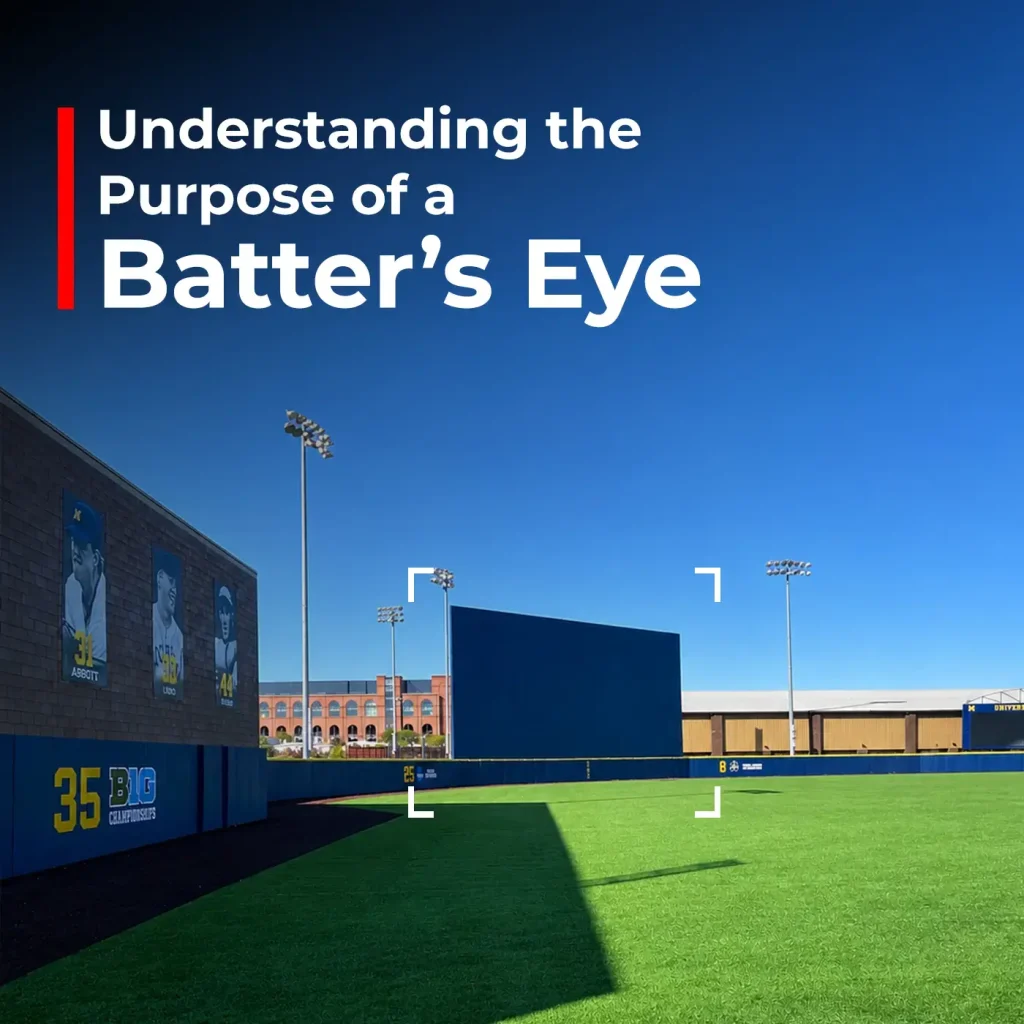
A batter’s eye is a solid, dark backdrop in the outfield, positioned behind the pitcher from the hitter’s point of view. It gives the batter a more consistent background, helping the ball stand out as it travels toward home plate.
Here’s why a batter’s eye matters and what facility managers should consider when planning one.
1. A Busy Background Can Make It Harder to Track a Pitch
Think about everything a hitter may see beyond the pitcher: spectators moving in the stands, signs, light-colored buildings, scoreboards, trees, and other objects. All of these can compete for the hitter’s attention.
The ball travels toward home plate quickly. The hitter needs to recognize it as soon as it leaves the pitcher’s hand. A background with too much visual activity can make it harder to pick out the ball.
A batter’s eye helps address this problem by giving the hitter a consistent background. Instead of looking at a mix of colors, shapes, and movement, the batter sees a solid, dark area behind the pitcher.
It does not guarantee that every pitch will be easy to see. Lighting, weather, and other conditions still play a role. But it helps remove one source of avoidable visual distraction.
2. Its Location Is More Important Than You Might Think
A batter’s eye is usually placed beyond the outfield fence in straightaway center field. From home plate, it sits directly behind the pitcher.
Why center field? Because the goal is to put the dark background in the hitter’s line of sight as the pitcher delivers the ball.
This makes the batter’s eye an important part of the original field layout. It should not be treated as an extra structure to add after the rest of the ballpark is finished.
During planning, designers should look at the field from the batter’s position. They need to consider nearby buildings, scoreboards, light poles, signs, and other objects that could appear behind the pitcher.
The best location is one that gives hitters a clear, consistent background without competing visual elements.
3. Dark Colors Are a Functional Choice, Not Just a Design Preference
Have you ever noticed that batter’s eyes are usually black, dark green, or dark blue?
Those colors serve a purpose. A dark, solid background helps create contrast against a white baseball or softball. It also keeps the backdrop from drawing attention away from the pitch.
The World Baseball Softball Confederation (WBSC) identifies black, green, and blue as suitable dark colors for batter’s eyes in its softball venue guidelines. Its baseball venue guidelines also call for a solid, dark-colored area behind center field.
This is why a batter’s eye should not be designed like a typical advertising display. Bright colors, busy patterns, and other visual details can work against its main purpose.
The goal is not to make the structure stand out. The goal is to give the hitter a background that does not compete with the ball.
4. Advertising and Logos May Not Belong in the Batter’s Eye Area
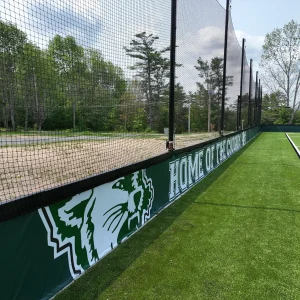
Schools, colleges, and professional teams often use their outfield fences to display sponsor names, team logos, and other messages.
But the area directly behind the pitcher needs special attention.
The WBSC’s baseball and softball venue guidelines address keeping the batter’s eye area clear of advertising and logos. The goal is to protect the visual background hitters need to follow the pitch.
This is an important detail for facilities that plan to use their outfield structures for branding or sponsor recognition.
Advertising may be appropriate in other parts of the outfield, but it should not interfere with the batter’s view. Facility managers should check the rules for their level of competition before deciding where signs and graphics can go.
5. Baseball and Softball Batter’s Eyes Do Not Always Have the Same Requirements
Baseball and softball share many field features, but their facility guidelines are not always identical.
For example, the WBSC’s competition venue guidelines give different recommendations for batter’s eye dimensions:
- Baseball: The WBSC recommends a batter’s eye no smaller than 40 feet high by 80 feet wide.
- Softball: The WBSC recommends the batter’s eye extend at least 15 feet to the left and right of center field.
These are WBSC venue recommendations, not universal dimensions for every school, college, league, or tournament. Requirements can vary by governing body and level of competition.
That is why facility planners should check the applicable standards before choosing a size. The field’s layout and the hitter’s view also need to be considered.
6. Batter’s Eyes Come in More Than One Design
A batter’s eye does not have to be a traditional wall. The right construction depends on the facility’s needs, appearance goals, and project requirements. Sportsfield Specialties offers the following options for baseball and softball facilities:
Solid-surface ribbed panels
These panels have a ribbed profile that gives the batter’s eye a more defined architectural appearance while providing a solid backdrop.
Solid-surface flush panels
These panels have a smooth, flush profile for facilities that prefer a cleaner, more streamlined appearance. The metal panel options are available in a variety of standard colors. Select models also offer digital graphics upon request, subject to the requirements for the facility and competition.
These choices let facility planners consider the appearance of the structure without losing sight of its main job: providing a clear background for hitters.
7. The Support Structure Matters, Too
A batter’s eye can be a large outdoor structure. Its design needs to account for more than the surface that hitters see. Wind exposure, soil conditions, foundation requirements, and the way the structure is mounted all matter. These details should be considered early in the project.
Sportsfield Specialties offers professionally pre-engineered batter’s eye systems with two mounting options:
- Direct embedment: The support structure is installed into the ground.
- Base plate mounting: The structure is secured to a prepared foundation using base plates.
Systems are available in several pre-engineered sizes, with custom sizes and designs available upon request. Choosing the right mounting method depends on the site and project design. Facility owners should work with their design and construction teams to confirm the appropriate foundation and installation plan.
What Should You Consider When Choosing a Batter’s Eye?
A batter’s eye may seem like a simple part of the outfield, but choosing the right system involves several decisions.
Before starting a project, consider:
- Level of competition: Check the rules and recommendations that apply to your league or organization.
- Location: Review the view from home plate and identify anything that could distract hitters.
- Dimensions: Select a height and width that provide the needed background.
- Color: Choose a dark, solid color that supports visibility and meets applicable guidelines.
- Construction: Compare solid windscreen, ribbed metal panels, and flush metal panels.
- Mounting: Determine whether direct embedment or base plate mounting is appropriate.
- Site conditions: Consider wind exposure, soil, foundation needs, and other installation factors.
Making these decisions early can help the batter’s eye fit the field rather than forcing the field design to work around it.
Give Hitters the Clear Background They Need
A batter’s eye may not be the first feature fans notice when they walk into a ballpark, but it plays an important role in the game. It helps create a clear background behind the pitcher so hitters can focus on tracking the ball.
Without it, signs, buildings, spectators, and other visual distractions can compete for the hitter’s attention.
Sportsfield Specialties offers baseball and softball batter’s eye systems in solid windscreen, ribbed metal panel, and flush metal panel designs. With multiple sizes, single-sided and double-sided configurations, and different mounting options, facilities can choose a system that fits their project.
Whether you are planning a new baseball field, building a softball complex, or upgrading an existing stadium, make the batter’s eye part of the field design from the start.
Explore Sportsfield Specialties’ Baseball and Softball Batter’s Eye systems to compare designs, sizes, and installation options.