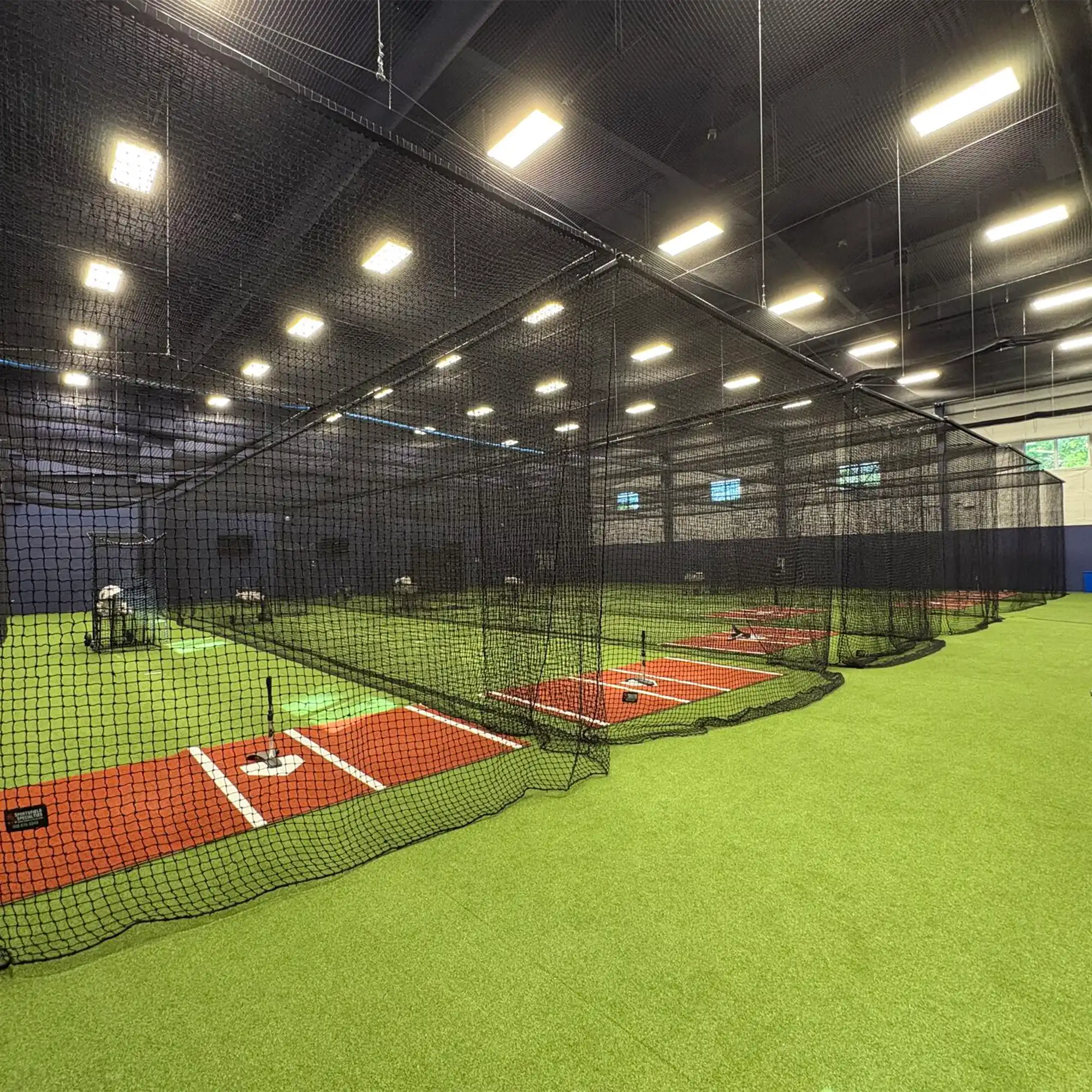

Indoor Batting Tunnels
- Custom layouts that fit client needs
- Stationary, drop-down, and retractable models available
- Professionally engineered designs and connection points
- Strong #60 netting for high-use facilities
- Site visit with Sportsfield representative built into cost
- Excellent turnkey service from design to installation
Product Description
Great players are built through consistent practice, and that shouldn’t stop when the weather changes. Indoor batting tunnels create a dedicated training space where baseball and softball athletes can work on hitting, pitching, and other skills throughout the year in a safe, organized environment.
Sportsfield Specialties indoor batting tunnels are designed for schools, colleges, universities, training academies, indoor sports facilities, recreation centers, and professional training complexes. Our indoor batting tunnels help maximize available space while supporting efficient practice sessions for athletes of every skill level.
Available in a variety of lengths, widths, and custom layouts, our indoor batting cages can be configured to match the goals of your facility. Whether you’re building a single practice lane or designing a multi-tunnel training center, our systems provide durable netting, dependable performance, and the flexibility to support a wide range of baseball and softball training activities.
Indoor batting tunnels are part of Sportsfield Specialties’ complete line of baseball and softball training equipment. Pair them with our baseball backstop netting systems, Ultra Cross® knotless netting, bat & helmet storage, pitching mounds, team benches, and other sports facility equipment to create a complete training environment designed for player development.
Whether you’re planning a new indoor baseball facility or expanding an existing training center, our team can help you choose the right indoor batting tunnels for your project. Contact Sportsfield Specialties to request a quote or learn more about our complete line of baseball and softball training solutions.
Product Documentation
BTITB - Indoor baseball tension batting tunnel
BTITS - Indoor softball tension batting tunnel
BTIVRB - Baseball vertically retractable batting tunnel
BTIVRS - Softball vertically retractable batting tunnel
BTIPND - Indoor perimeter netting with dividers
Frequently Asked Questions
What structural elements are required to support an indoor batting tunnel system?
Indoor batting tunnels rely on properly placed structural attachment points within the building. This can include roof beams, trusses, or other overhead framing. Sportsfield evaluates your facility to determine where loads can be safely distributed, ensuring the system integrates with the structure without compromising performance.
Can indoor batting tunnels be installed in existing facilities without major renovations?
In many cases, yes. Sportsfield regularly designs systems that adapt to existing structures. The key is working around ceiling height, obstructions, and available attachment points. Their design process focuses on minimizing the need for structural changes whenever possible.
Does Sportsfield provide installation guidance or on-site support?
Yes. Sportsfield supports projects from design through installation. This can include detailed layout drawings, coordination with contractors, and guidance to ensure the system is installed correctly and performs as intended.
Are retractable tunnel systems more complex to install than stationary ones?
They do require additional components and planning. Retractable systems involve mechanisms that allow the netting to move or store when not in use. While the installation is more involved, the added flexibility can be a major benefit for multi-use facilities.