
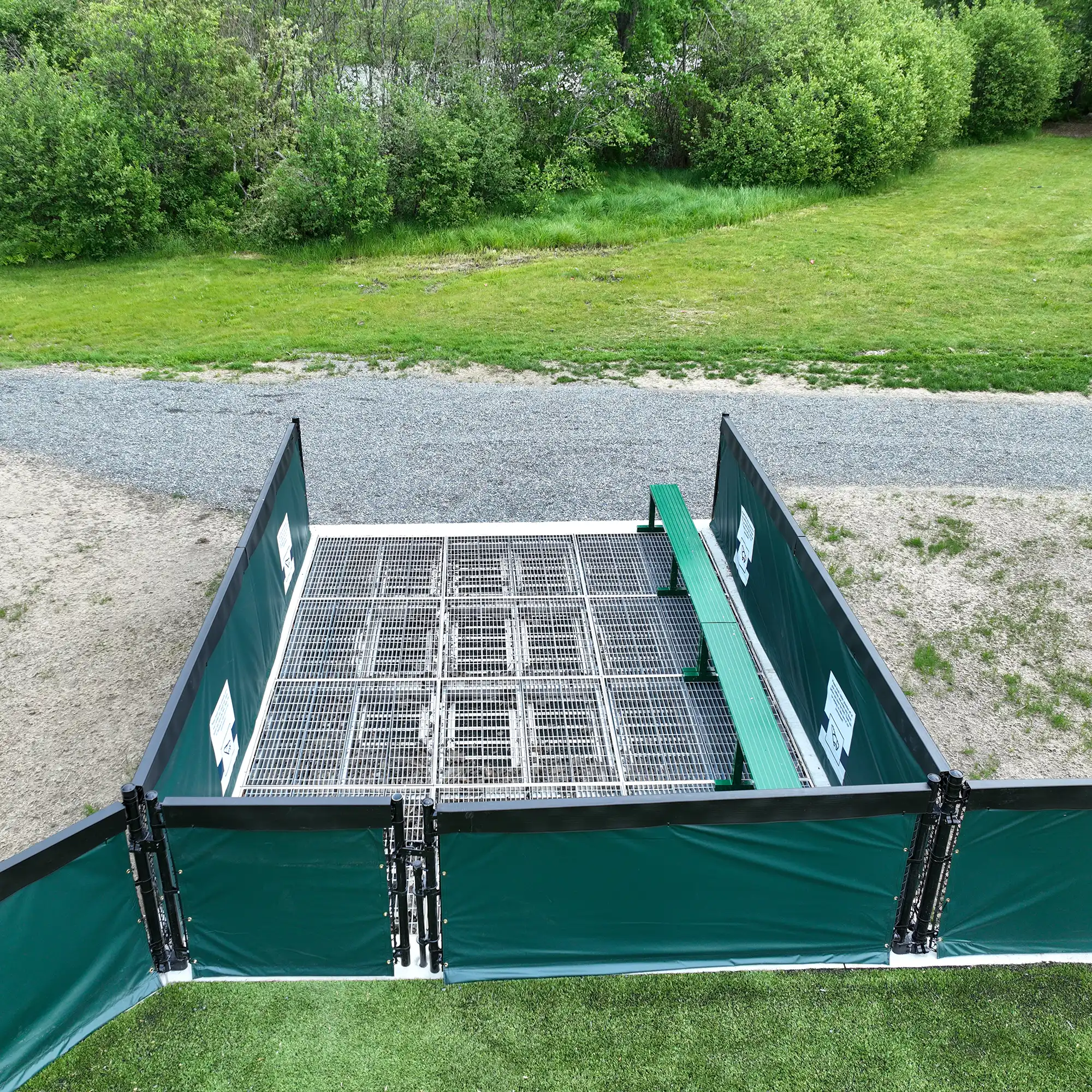
Synthetic Turf Infill Barrier Containment Systems
- Prevents infill flyout and migration through chain link fencing
- Vinyl Coated Polyester Mesh (VCP/VCM) with factory enclosed lead line weighted bottom pocket
- Base fabric is 9 x 12 1000 denier polyester
- Weight is 8 oz. per square yard, plus or minus 1 oz.
- 80% closed mesh, 20% open area
- Standard heights available up to 6’
- Heat welded perimeter hem with 30mm PVC coated weldable webbing reinforcement tape
- #2 brass grommets inserted in top and side perimeter hems every 12” on-center and corners for attachment purposes
- Weather, UV, rot, mildew, and flame resistant
- Various standard colors available
- Custom digitally printed lettering and/or logos available upon request
Product Description
Keeping infill on the field is an important part of maintaining a synthetic turf surface. Everyday play, maintenance equipment, weather, and foot traffic can gradually move infill beyond the playing area, leading to extra cleanup and additional maintenance. Synthetic turf infill barrier containment systems help reduce infill migration while supporting cleaner, better-maintained athletic facilities.
Sportsfield Specialties synthetic turf infill barrier containment systems are designed for schools, colleges, universities, municipalities, parks, and professional athletic facilities. These durable infill barrier systems create a physical barrier that helps keep infill where it belongs, reducing movement beyond the field and helping maintain a cleaner perimeter around the playing surface.
Whether you’re installing a new synthetic turf field or upgrading an existing facility, our synthetic turf infill barriers provide a practical solution that supports long-term maintenance. By helping reduce infill migration, these systems can decrease cleanup time, improve field appearance, and help maintain more consistent playing conditions throughout the season.
Synthetic turf infill barrier containment systems are part of Sportsfield Specialties’ complete line of synthetic turf maintenance solutions. Pair them with our synthetic turf infill collection & containment systems and synthetic turf drag brush groomers to create a comprehensive maintenance program that helps protect your synthetic turf investment. Sportsfield Specialties also offers drainage systems, utility boxes, football goal posts, soccer goals, baseball & softball equipment, and a complete line of athletic facility products, making it easy to source everything your project needs from one experienced manufacturer.
Whether you’re looking to reduce infill loss on a new field or improve maintenance at an existing facility, our team can help you choose the right synthetic turf infill barrier containment solution for your project. Contact Sportsfield Specialties to request a quote or learn more about our complete line of synthetic turf maintenance products.
Product Documentation
CSITB - Barrier synthetic turf infill containment system
Frequently Asked Questions
Where should synthetic turf infill barriers be installed?
Barrier containment is typically installed at high-traffic entry and exit points, such as gates, sideline access areas, and team bench entrances. These locations are where infill is most likely to be carried off the field by foot traffic or equipment.
What types of infill materials can barrier containment help control?
Barrier containment systems help manage common synthetic turf infill materials including crumb rubber, coated rubber, sand, and performance infill blends. Keeping these materials on the field helps maintain consistent turf performance.
Does barrier containment help reduce field maintenance time?
By limiting the spread of infill into surrounding areas, facilities spend less time sweeping sidewalks, clearing drains, or cleaning nearby surfaces. This helps maintenance teams focus more on field grooming and performance.
Can infill barriers protect surrounding surfaces like tracks or walkways?
Infill barriers help prevent materials from migrating onto running tracks, sidewalks, locker room entrances, and landscaped areas. This keeps adjacent facility spaces cleaner and reduces potential wear.