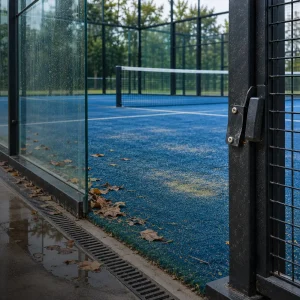
Padel courts experience regular wear from player activity, weather, cleaning and everyday use. Over time, that wear can lead to problems with artificial turf, glass panels, structural components, gates, padding, lighting and other parts of the court.
Some problems are easy to spot. Others develop gradually and may go unnoticed until they affect court performance, player safety or daily operations.
Common padel court problems include worn artificial turf, cracked glass, loose structural components, poor drainage, sticking gates, damaged padding, net issues, corrosion and lighting failures. Regular inspections and proper maintenance can help facility owners identify these problems early and address them before they become more serious.
Not every problem requires a major repair. Knowing what to look for, what may be causing it and when to involve a qualified professional can help you protect your court and keep your facility operating properly.
Here are some of the most common padel court problems, along with practical ways to help prevent them.
Common Padel Court Problems at a Glance
| Common problem | Warning signs | Recommended response |
| Synthetic turf wear | Flattened areas, damaged seams, uneven infill | Inspect the surface and follow the turf manufacturer’s maintenance guidance. |
| Cracked or damaged glass | Chips, cracks, damaged edges | Restrict access to the affected area and arrange a professional evaluation. |
| Structural damage | Loose hardware, corrosion, movement or misalignment | Document the condition and contact the manufacturer or qualified professional. |
| Drainage problems | Standing water, slow drainage, repeated water collection | Inspect drainage paths and evaluate the surrounding site conditions. |
| Gate problems | Sticking, dragging or locking difficulties | Inspect the gate and follow the manufacturer’s adjustment and repair instructions. |
| Damaged padding | Torn vinyl, exposed foam, loose attachment | Evaluate the padding and arrange appropriate repairs or replacement. |
| Net and net post problems | Damaged netting, changes in tension, loose hardware | Inspect the net, posts and connections. |
| Corrosion | Discoloration, exposed metal, rust | Evaluate the affected area and follow the manufacturer’s recommendations. |
| Lighting problems | Failed fixtures, uneven lighting, electrical issues | Arrange inspection and repairs by qualified electrical personnel when needed. |
| Excessive debris | Leaves, dirt, pollen and other material | Establish a cleaning routine based on usage and environmental conditions. |
1. Artificial Turf Problems on Padel Courts
The artificial turf takes a lot of use during a typical padel match. Players constantly start, stop, turn and change direction. Over time, these movements can contribute to wear, particularly in areas that receive the most foot traffic.
Outdoor courts also experience environmental conditions that can affect the playing surface.
Common Signs of Turf Problems
During inspections, look for:
- Flattened or worn areas.
- Loose or damaged seams.
- Changes in the appearance or texture of the turf.
- Uneven infill distribution.
- Damaged or displaced court lines.
- Noticeable differences between high-use and low-use areas.
Not every change means the turf needs to be replaced. The important thing is to identify unusual wear and understand what’s causing it.
What Causes Padel Court Turf Problems?
Several factors can contribute to artificial turf deterioration:
- Heavy or uneven court usage.
- Improper cleaning methods.
- Accumulated dirt and debris.
- Changes in infill distribution.
- Weather and environmental exposure.
- Installation problems.
- Normal material aging.
A court booked throughout the day will naturally experience more wear than one used occasionally. That’s why maintenance needs can vary between courts, even within the same facility.
How to Prevent Artificial Turf Problems
Regular cleaning and visual inspections are the best starting points. Pay attention to areas that experience frequent player movement. Look for changes in the turf’s appearance, condition and infill distribution.
Use cleaning equipment and methods approved for the specific turf system. Don’t assume that cleaning procedures used on other types of synthetic sports surfaces are appropriate for padel courts.
If you notice unusual wear, consider the court’s usage, cleaning practices, installation and surrounding conditions before assuming the turf itself is the problem.
Sportsfield Specialties’ PaDelhi™ padel court systems include synthetic turf with inlaid court lines. For specific material and installation details, refer to the current product documentation for the selected court configuration.
2. Cracked or Damaged Padel Court Glass
Glass panels are an important part of a padel court. Players use the walls as part of the game, so the condition of the glass affects both play and player safety.
A small chip or crack might be easy to overlook during a busy day. However, glass damage should never be treated as a minor maintenance issue.
Common Signs of Glass Damage
Look for:
- Visible cracks.
- Chips or damaged edges.
- Changes around glass mounting points.
- Damage near brackets or support connections.
- Anything that looks different from previous inspections.
What Causes Glass Problems?
Glass damage can result from several conditions, including:
- Impact from objects or equipment.
- Damage during installation or handling.
- Problems with mounting hardware.
- Structural movement.
- Improper installation.
- Environmental or site-related conditions.
The cause isn’t always obvious from a visual inspection.
How to Prevent Padel Court Glass Problems
Include the glass panels in routine visual inspections. Keep the glass clean so staff can identify cracks, chips and other changes more easily.
Pay particular attention to the areas around mounting points and panel edges.
If you find damaged glass, keep players away from the affected area and contact the court manufacturer or an appropriate qualified professional. Don’t attempt to repair, remove or replace a glass panel without the proper experience and equipment.
Sportsfield Specialties’ PaDelhi™ padel court systems use tempered glass panels as part of their court structures. The glass specifications vary by court configuration, so always refer to the documentation for the specific system.
3. Loose or Damaged Padel Court Structural Components
A padel court is more than glass and artificial turf. Its structure includes steel posts, framing, mesh panels, brackets, base plates, hardware and other components that work together.
Problems with these components can be harder to identify because they’re not always in the areas players look at during normal play.
Common Signs of Structural Problems
Watch for:
- Loose hardware.
- Visible damage to steel components.
- Corrosion.
- Changes in alignment.
- Damaged mesh panels.
- Unexpected movement.
- Changes around base plates or mounting points.
What Causes Structural Problems?
Normal use can contribute to wear, but other factors can matter too.
Outdoor courts experience moisture, temperature changes, wind and other environmental conditions. Installation quality, foundation conditions and protective finishes also affect long-term performance.
This is one area where routine maintenance has limitations. Cleaning and tightening hardware won’t correct an underlying installation or structural problem.
How to Prevent Structural Problems
Inspect the complete court structure, including areas that aren’t immediately visible to players. Pay attention to the condition of steel framing, mesh panels, connections, base plates and exposed hardware.
For outdoor courts, look for signs of moisture accumulation and corrosion.
If something appears loose, damaged or out of alignment, document the condition and follow the manufacturer’s recommendations. Don’t attempt to modify structural components without understanding the requirements of the engineered court system.
Sportsfield Specialties’ PaDelhi™ court systems use engineered steel structural components and connections. The outdoor panoramic system is professionally pre-engineered for specified ASCE 7 wind loads.
Proper site preparation, foundation construction and installation are important parts of protecting the court’s structural performance.
4. Padel Court Drainage Problems and Standing Water
Drainage is an important part of outdoor padel court construction and maintenance. A drainage problem might not be noticeable during dry weather. However, after heavy rainfall, water may collect around the court or take longer than expected to drain.
Sometimes the problem is related to blocked drainage paths. In other cases, the surrounding grade, foundation or site drainage may be contributing to the issue.
Common Signs of Drainage Problems
Look for:
- Standing water around the court.
- Water that repeatedly collects in the same location.
- Slow drainage after rainfall.
- Blocked drainage areas.
- Soil movement or erosion.
- Changes in the surrounding grade.
How to Prevent Padel Court Drainage Problems
Pay attention to the court and surrounding area after significant rainfall. Keep drainage paths clear of leaves, dirt and other debris. Look for areas where water repeatedly collects and document any changes.
If standing water continues to be a problem, don’t treat it as a simple cleaning issue. The underlying drainage or site conditions may need to be evaluated.
Drainage should also be addressed during the original facility design. The court, foundation, surrounding surfaces and site drainage all need to work together.
A drainage problem that begins during construction can become much more difficult and expensive to correct after the facility opens.
5. Padel Court Gate Problems
Court gates get used throughout the day. Players, facility staff and maintenance personnel all depend on them to operate properly. At a busy facility, repeated use can contribute to wear on the gate, locking mechanism and related hardware.
Common Signs of Gate Problems
Watch for:
- Gates that become difficult to open.
- Gates that don’t close completely.
- Locking mechanisms that don’t operate correctly.
- Dragging or restricted movement.
- Loose hardware.
- Changes in gate alignment.
- Obstructions affecting gate movement.
How to Prevent Gate Problems
Include gates in routine inspections. Open and close them to check for changes in movement and operation. Don’t force a gate that sticks or drags. Determine what may be causing the problem and follow the manufacturer’s recommendations for adjustments or repairs.
Sportsfield Specialties offers PaDelhi™ entrance/exit gate systems designed for its padel court configurations.
Because gates are used throughout the day, they should be included in the facility’s regular maintenance program.
6. Damaged Padel Court Padding
Padding is installed around certain areas of a padel court where players may come into contact with structural components. Common locations include entrances, exits and net posts. Padding provides an additional layer of protection, but it still needs to be inspected and maintained.
Common Signs of Padding Damage
Look for:
- Torn vinyl.
- Loose attachment.
- Exposed foam.
- Gaps or shifted sections.
- Damage from repeated contact.
- Deterioration around attachment points.
How to Prevent Padding Problems
Include padding in the same inspection process as the rest of the court. Check that the padding remains securely attached and that the protective material hasn’t become damaged or displaced.
If you find damage, determine whether the padding can be repaired or needs replacement. Follow the manufacturer’s recommendations rather than attempting an improvised repair.
Sportsfield Specialties offers PaDelhi™ Entrance/Exit and Net Post Padding designed for compatible PaDelhi™ court systems.
These accessories are designed specifically for padel court applications rather than being general-purpose athletic padding.
7. Padel Court Net and Net Post Problems
The net is one of the simplest components of a padel court, but it still requires attention. Repeated use can affect net condition and tension. The posts, connections and mounting hardware should also be inspected.
Common Signs of Net Problems
Watch for:
- Damaged or frayed netting.
- Changes in net tension.
- Loose hardware.
- Damage around the posts.
- Components that appear out of position.
- Damage to net attachments.
How to Prevent Net Problems
Include the net and posts in routine inspections. Check the condition of the netting and look for changes in tension or alignment. Inspect the connections and hardware for visible damage.
If something doesn’t look or operate as it normally should, document the issue and follow the manufacturer’s maintenance guidance.
The PaDelhi™ court system includes padel court posts and net components as part of the complete court system.
8. Corrosion on Outdoor Padel Court Structures
Outdoor padel courts experience regular exposure to moisture and changing weather conditions.
Over time, rain, humidity, snow, ice and other environmental factors can affect metal components and their protective finishes.
Corrosion may start as a small area of discoloration, a scratch or exposed metal. If left unaddressed, it may become more extensive.
Common Signs of Corrosion
During inspections, look closely at:
- Steel framing.
- Structural posts.
- Base plates.
- Hardware and connections.
- Areas where moisture collects.
- Scratched or damaged protective finishes.
- Discoloration or visible rust.
How to Prevent Corrosion
Inspect exposed metal components regularly, paying particular attention to areas where moisture can collect. Keep the court and surrounding areas clean. Remove debris that may hold moisture against structural components.
If you find corrosion, determine the location and extent of the damage before attempting any treatment. The appropriate response depends on the affected component and the manufacturer’s recommendations.
Environmental conditions also matter. An outdoor court in a wet or coastal area may have different maintenance needs from one in a dry climate.
Sportsfield Specialties’ PaDelhi™ outdoor panoramic court system uses powder-coated steel components. Protective finishes help protect the steel, but they don’t eliminate the need for regular inspections.
9. Padel Court Lighting Problems
Lighting affects when and how a padel facility can operate. A failed fixture is easy to notice, but other problems can develop before a complete lighting failure. Uneven lighting, damaged fixtures and electrical issues can all affect the playing environment.
Common Signs of Lighting Problems
Look for:
- Lights that don’t operate.
- Damaged fixtures.
- Uneven lighting across the court.
- Flickering or inconsistent operation.
- Visible damage to electrical components.
- Problems with lighting controls.
How to Prevent Lighting Problems
Include lighting in routine visual inspections. Check that fixtures operate properly and that the playing surface receives consistent lighting. Pay attention to visible damage around fixtures, mounting points and electrical connections.
Don’t attempt electrical repairs unless you’re qualified and authorized to perform them. Electrical problems should be handled by the appropriate professional.
Sportsfield Specialties offers PaDelhi™ court systems with integrated LED lighting options. The number and specifications of the fixtures depend on the selected court configuration.
Always follow the manufacturer’s documentation when inspecting or servicing lighting components.
10. Excessive Debris on the Playing Surface
Leaves, pollen, dirt, sand and other debris can collect on padel court surfaces. This is especially common with outdoor courts located near trees, landscaping and other areas that produce debris.
Indoor padel courts aren’t immune, either. Player traffic can bring dirt and other material onto the playing surface.
How to Prevent Debris Problems
Build cleaning into the facility’s normal operating schedule. The appropriate cleaning frequency depends on court usage and environmental conditions.
For example:
- Outdoor courts near trees may need more frequent cleaning during certain seasons.
- Courts in areas with heavy pollen may need additional attention in the spring.
- Busy indoor courts may need frequent cleaning because of player traffic.
- Outdoor courts may need additional cleaning after storms or high winds.
Use cleaning equipment and methods approved for the specific turf system. Don’t wait until the playing surface looks neglected. Consistent cleaning also makes it easier to spot developing turf or structural problems.
11. Problems Caused by Heavy Court Use
Sometimes a padel court problem isn’t caused by poor maintenance. It’s caused by heavy use. A court booked from morning through late evening will experience more player traffic than one used a few times each week.
That difference can affect:
- Turf wear.
- Net condition.
- Gate operation.
- Cleaning requirements.
- Inspection frequency.
- Accessory condition.
How to Prevent Use-Related Problems
Track court usage whenever possible. Your booking software may already provide information about how frequently each court is used. Use that information to identify high-use courts and pay closer attention to their condition. This is especially important for facilities with multiple courts.
If one court consistently shows more wear than the others, investigate the reason rather than immediately assuming something is wrong with the product.
Usage patterns can help you determine whether the maintenance program needs to change.
When Is a Padel Court Problem More Than a Maintenance Issue?
Not every court problem can be corrected through routine maintenance. Sometimes a recurring issue points to a more serious problem involving installation, structural performance, site conditions or a component that isn’t operating as intended.
For example:
- Repeated standing water may indicate a drainage or grading problem.
- Unexpected structural movement may require an engineering or installation review.
- Glass damage may require professional evaluation and replacement.
- Repeated hardware problems may point to an underlying alignment or installation issue.
- Unusual turf wear may be related to usage, installation, cleaning or another condition.
When a problem keeps coming back, ask an important question:
Are we correcting the cause of the problem, or just fixing the symptoms?
Replacing the same component repeatedly without investigating why it fails can waste time and money. If the problem involves structural performance, installation, site conditions or a component that isn’t behaving as expected, involve the court manufacturer and the appropriate qualified professional.
What Should You Do When You Find a Serious Padel Court Problem?
Some maintenance issues can be addressed during normal facility operations. Others require immediate attention. Problems involving damaged glass, potentially compromised structural components or conditions that create an immediate playing hazard should never be left on a routine maintenance list.
When a potentially serious problem is discovered:
- Stop play when the condition could affect player safety.
- Keep players and staff away from the affected area.
- Document the problem and its location.
- Notify the person responsible for facility maintenance.
- Contact the court manufacturer or appropriate qualified professional when necessary.
- Follow the recommended inspection and repair process.
- Return the affected area to service only after the issue has been properly evaluated and addressed.
Facility staff shouldn’t be expected to make technical safety decisions beyond their training. When you’re unsure whether a condition is safe, don’t guess.
How to Prevent Padel Court Problems Before Installation
Some of the best ways to prevent future court problems happen before a facility opens. The site needs to be appropriate for the selected court system. The foundation needs to meet the manufacturer’s requirements. Drainage needs to be addressed. The court needs to be installed correctly.
For outdoor facilities, local weather and wind conditions also need to be considered.
Other important planning considerations include:
- Site grading and drainage.
- Foundation design and construction.
- Proper anchoring and installation.
- Electrical requirements.
- Lighting placement.
- Court access and surrounding circulation.
- Environmental exposure.
- Selection of compatible accessories.
These aren’t routine maintenance tasks, but they can have a major effect on the long-term condition and operation of the court.
Sportsfield Specialties works with owners, architects, contractors and developers on padel court projects. Its PaDelhi™ product line includes indoor full panoramic and outdoor panoramic court systems, along with compatible accessories.
Involving the manufacturer during the planning and design process can help identify project requirements before construction begins.
Some problems are much easier to prevent during site preparation and installation than they are to correct after a court is operating.
Build a Maintenance Program Around Your Padel Court
There isn’t one maintenance schedule that works for every padel facility. A two-court indoor facility with moderate usage has different needs from a large outdoor facility with courts booked throughout the day.
Your maintenance program should account for:
- Court usage.
- Indoor or outdoor installation.
- Local weather conditions.
- Site drainage.
- Court design and configuration.
- Component condition.
- Manufacturer recommendations.
Keep records of inspections, repairs, replacement components and recurring problems. This information can help you identify patterns and understand how individual courts are performing over time.
For example, if one court repeatedly needs gate repairs or shows more turf wear than the others, investigate the cause.
A maintenance log can help you make better decisions about repairs and future maintenance needs.
For more information about organizing inspections, scheduling maintenance and tracking costs, see our guides to padel court maintenance best practices and the cost of maintaining a padel court.