Maintaining a padel court involves more than keeping the playing surface clean. Facility owners and managers also need to inspect court components, track wear, address developing problems and make sure maintenance gets done consistently.
Some common padel court maintenance mistakes are easy to overlook. Cleaning without inspecting, using the wrong cleaning products, ignoring small changes and relying on memory instead of a maintenance plan can all create problems over time.
These mistakes don’t always cause immediate damage. But they can make maintenance more difficult, lead to unnecessary repairs and affect how well your facility operates.
Whether you manage a single court or a facility with several courts, having a consistent maintenance process makes a difference.
Here are 13 common padel court maintenance mistakes to avoid and what you should do instead.
1. Waiting Until the Court Looks Dirty Before Cleaning
A padel court doesn’t need to look dirty before it needs attention. Outdoor courts collect leaves, pollen, dirt, sand and other debris. Indoor courts collect dust and debris from daily player traffic. Some buildup may not be obvious until it becomes more difficult to remove.
Waiting too long between cleanings can also allow debris to accumulate in corners, along court edges and around other components.
What to do instead
Establish a cleaning routine based on court usage and environmental conditions.
For example:
- Outdoor courts near trees may need more frequent cleaning during certain seasons.
- Courts in areas with heavy pollen may need additional attention in the spring.
- High-use indoor courts may need frequent cleaning because of player traffic.
- Outdoor courts may need additional cleaning after storms or high winds.
Don’t rely on appearance alone to determine when a court needs cleaning. Consistent care makes it easier to maintain the playing surface and notice changes in the court’s condition.
2. Assuming Cleaning Is the Same as Inspecting
Cleaning and inspection serve different purposes. A court can look clean and still have problems. A damaged glass panel, loose hardware, worn turf, a sticking gate or damaged padding may not be noticed during routine cleaning.
This is particularly easy to overlook at busy facilities where employees are focused on preparing courts for the next players.
What to do instead
Give inspections their own place in your maintenance routine.
A visual inspection should consider the entire court, including:
- Synthetic turf and court lines.
- Glass panels.
- Steel framing and mesh.
- Net and net posts.
- Gates and locking hardware.
- Padding and other accessories.
- Lighting.
- Drainage and surrounding areas on outdoor courts.
Staff don’t need to diagnose every problem. They need to recognize when something has changed, document it and know who to notify. Separating inspections from cleaning helps make sure both tasks get the attention they need.
3. Ignoring Small Maintenance Issues
It’s easy to put off a minor repair when the court is still usable. A gate becomes slightly harder to open. A section of padding starts to loosen. A piece of hardware looks different than it did last month.
Nobody considers it urgent, so it gets ignored. The problem is that small changes can become more difficult to address if nobody follows up.
What to do instead
Record maintenance issues when you find them. Then determine whether they need routine attention, prompt repair or professional evaluation. Not every issue requires a court closure. However, problems that could affect player safety or structural performance need to be taken seriously.
If something appears damaged, loose or out of alignment, don’t assume it can wait until the next scheduled maintenance day.
When you’re unsure what to do, follow the Sportsfield Specialties recommendations and involve the appropriate qualified professional.
4. Treating Drainage as an Afterthought
Drainage is easy to forget because most of the system isn’t visible during normal play. But outdoor padel courts depend on proper site drainage to help manage water around the court and its foundation.
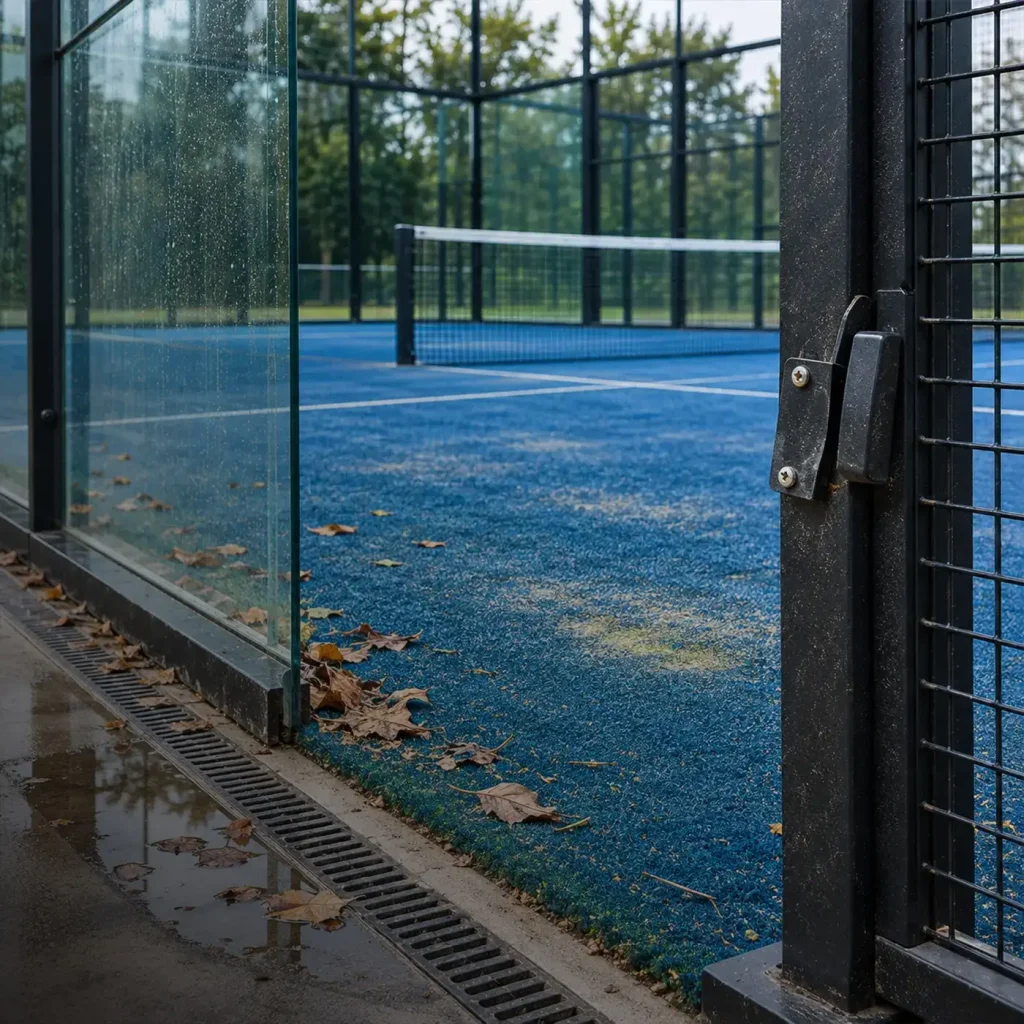
Heavy rainfall can expose problems that aren’t noticeable during dry weather. Leaves and other debris can also interfere with drainage paths.
What to do instead
Make drainage part of your outdoor court maintenance routine.
After significant rainfall, check for:
- Standing water.
- Areas that drain unusually slowly.
- Debris blocking drainage paths.
- Changes in the surrounding grade.
- Repeated water collection in the same location.
Keep accessible drainage areas clear of leaves, dirt and other debris. If water continues to collect, don’t assume cleaning will solve the problem. The underlying drainage, grading or site conditions may need to be evaluated.
Drainage should also be addressed during the original facility design and construction. It’s much easier to plan for proper drainage before a court is installed than to correct a site problem after the facility opens.
5. Using the Same Cleaning Products and Tools on Every Court Surface
A padel court contains several different materials. Synthetic turf, tempered glass, steel framing, powder-coated finishes, padding and netting all have different care requirements.
A cleaning product that’s appropriate for one surface may damage another. The same applies to brushes, scrapers, pressure washers and other cleaning equipment. Using the wrong products or methods can cause unnecessary wear or damage to court components.
What to do instead
Follow the manufacturer’s cleaning recommendations for the specific court system and its components. Before using a new cleaning product or tool, make sure it’s appropriate for the surface you’re treating.
Pay particular attention when cleaning:
- Artificial turf.
- Tempered glass.
- Painted or coated steel.
- Court padding.
- Nets and other accessories.
Don’t assume that a cleaning method used on another type of athletic surface is appropriate for your padel court. If you’re unsure whether a product or cleaning method is suitable, contact the court manufacturer before using it.
6. Overlooking Gates, Padding and Other Court Accessories
Facility managers naturally pay attention to the main court structure, but smaller components deserve attention too. Players interact with gates, net posts and protective padding throughout the day. These components experience regular use and should be included in the maintenance program.
A gate that doesn’t operate properly or padding that has become loose can affect daily facility operations and the playing environment.
Sportsfield Specialties offers PaDelhi™ Entrance/Exit and Net Post Padding and PaDelhi™ Entrance/Exit Gate Systems. These accessories are designed for specific padel court applications, but they still require regular inspection.
What to do instead
Include accessories in your normal inspection process.
Check:
- Gates and locking hardware.
- Net systems and posts.
- Padding and attachment points.
- Lighting and visible electrical components.
- Other installed accessories.
Look for damage, loose connections, changes in operation and anything that doesn’t appear to be working as intended. Don’t wait until an accessory stops working before giving it attention.
7. Using the Same Maintenance Schedule for Every Court
Not every court in a facility experiences the same amount of use. One court might be booked from morning until late evening. Another might be used mainly for lessons or occasional recreational play.
Outdoor courts may also experience different environmental conditions depending on their location and exposure. Using one maintenance schedule for every court can result in some receiving too much attention while others don’t receive enough.
What to do instead
Create a standard maintenance process for the entire facility, then adjust the frequency of certain tasks based on actual conditions.
Consider:
- Court usage and booking frequency.
- Indoor or outdoor installation.
- Weather and environmental exposure.
- High-traffic areas.
- Previous maintenance issues.
- Components that require frequent attention.
Your booking software may already provide useful information about court usage. Use that information to identify high-use courts and adjust maintenance accordingly. If one court consistently requires more attention than the others, investigate why.
8. Relying on Memory Instead of Keeping Maintenance Records
“Someone usually checks the courts” isn’t a maintenance system. It may work when the same employees are always available, but it becomes a problem when someone takes time off, leaves the facility or moves into another position.
Without records, it’s difficult to know what was inspected, which repairs were completed or whether the same problem keeps coming back.
What to do instead
Give every court a maintenance record. It doesn’t need to be complicated. A spreadsheet may be enough for a smaller facility.
At a minimum, record:
- Inspection dates.
- Problems identified.
- Cleaning and maintenance completed.
- Repairs and replacement components.
- Court downtime.
- Follow-up work.
- Recurring issues.
Make sure the information is accessible to the people responsible for maintaining the facility. Good records help prevent missed tasks and give managers a better understanding of each court’s condition over time.
9. Replacing Components Based Only on Age
A component doesn’t automatically need to be replaced because it has reached a certain age. At the same time, waiting until something completely fails isn’t a good maintenance strategy. Usage, environmental conditions, installation, material condition and maintenance history can all affect how a component performs over time.
What to do instead
Consider the actual condition of each component when deciding whether it needs repair or replacement.
Pay attention to:
- Turf condition and wear.
- Netting and attachment points.
- Padding and protective materials.
- Gate operation.
- Structural hardware.
- Other installed components.
If something shows significant wear or damage, determine whether it can be repaired or needs replacement. For anything that could affect player safety or structural performance, follow the manufacturer’s recommendations and involve the appropriate qualified professional. Don’t rely on age alone to make maintenance decisions.
10. Treating Indoor and Outdoor Courts the Same
Indoor and outdoor padel courts have many of the same components, but their maintenance needs aren’t identical.
Outdoor courts experience rain, snow, ice, wind, sunlight, temperature changes and moisture. They may also collect more leaves, dirt and other environmental debris. Indoor courts avoid many of those conditions, but still experience daily player traffic, dust and normal component wear.
Sportsfield Specialties offers both PaDelhi™ indoor full panoramic and outdoor panoramic court systems.
The maintenance program should reflect the environment in which each court operates.
What to do instead
Start with the manufacturer’s recommendations for the specific court system. Then consider the conditions at your facility.
Outdoor court maintenance should pay particular attention to:
- Weather exposure.
- Drainage.
- Debris accumulation.
- Moisture and corrosion.
- Protective finishes.
- Changes in surrounding site conditions.
Indoor court maintenance should pay particular attention to:
- Player traffic.
- Turf cleanliness and condition.
- Glass and structural components.
- Gates and net systems.
- Padding and accessories.
- Lighting.
A maintenance plan that accounts for these differences is more useful than applying the same routine to every court.
11. Failing to Review Recurring Maintenance Problems
Keeping maintenance records is important, but simply recording problems isn’t enough. The information becomes much more useful when you review it.
For example, suppose one gate needs adjustment several times in a few months. Or one court consistently shows more turf wear than the others.
If you only deal with each issue when it happens, you may never recognize the larger pattern.
What to do instead
Review maintenance records periodically.
Ask:
- Which courts require the most maintenance?
- Which components need repairs most often?
- Are the same problems happening repeatedly?
- Are certain issues related to weather or usage?
- Are some components wearing faster than others?
- Have previous repairs actually addressed the problem?
Use those findings to adjust your maintenance process or investigate the underlying cause. The goal is to learn from maintenance history rather than simply keep adding to it.
12. Not Having a Clear Process for Reporting Serious Problems
A maintenance plan should tell employees what to do when they find something wrong. This becomes especially important when a problem could affect player safety. A damaged glass panel or potentially compromised structural component isn’t something to add to a list for someone to check next week.
What to do instead
Give staff a simple process for reporting and escalating problems.
When a condition could affect safe play:
- Stop play when appropriate.
- Keep players and staff away from the affected area.
- Document the problem and its location.
- Notify the person responsible for facility maintenance.
- Contact the court manufacturer or appropriate qualified professional when necessary.
- Follow the recommended inspection and repair process.
- Return the affected area to service only after the issue has been properly evaluated and addressed.
Staff don’t need to diagnose technical problems. They need to recognize when something may be serious and know who to contact. Make sure everyone understands this process before an issue occurs.
13. Waiting Until the Facility Opens to Create a Maintenance Plan
Maintenance shouldn’t be something you figure out after the first court develops a problem. If you’re planning a new padel facility, decide how the courts will be maintained before they open.
Consider:
- Who will clean the courts?
- Who will perform routine inspections?
- How will maintenance problems be reported?
- Who will handle repairs?
- Where will maintenance records be kept?
- Where will manufacturer documentation be stored?
- How will replacement components be ordered?
- What happens when a court needs to be taken out of service?
These questions become even more important for facilities with multiple courts.
Sportsfield Specialties works with owners, architects, contractors and developers on PaDelhi™ padel court projects. Planning for maintenance during the design and construction process can help facility owners understand the requirements of their selected court system before operations begin.
What to do instead
Build maintenance into your facility’s operating plan before opening day. Make sure employees understand their responsibilities, manufacturer documentation is accessible and there’s a process for handling both routine maintenance and unexpected problems. A little planning can prevent a lot of confusion later.