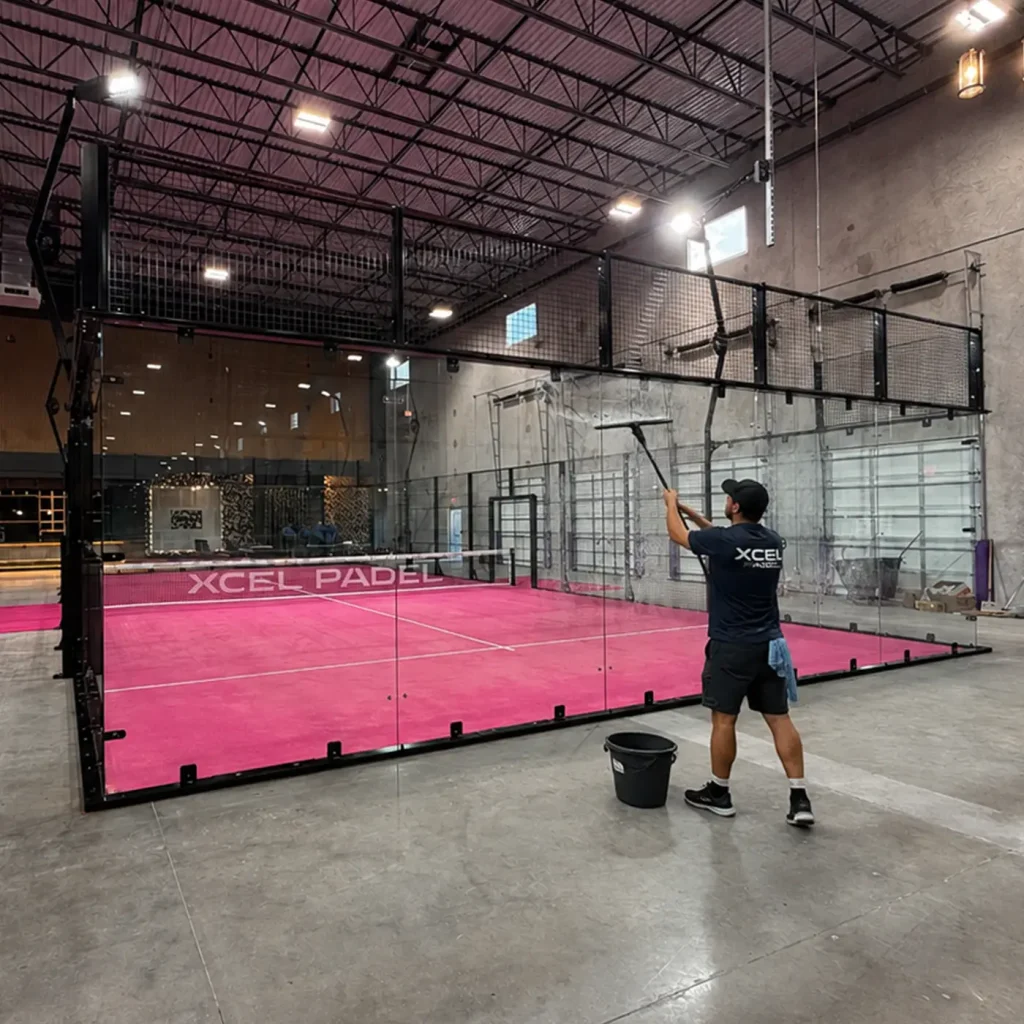
Padel is one of the fastest-growing sports in the world, and new courts are being built at clubs, parks, schools, resorts, and sports complexes every year. As more facilities invest in padel, one question becomes increasingly important: How do you keep a padel court performing at its best for years to come?
The answer starts with regular maintenance.
A well-maintained padel court is safer, looks more inviting, and delivers a more consistent playing experience. It can also help extend the life of the court, reduce unexpected repair costs, and maximize the return on your investment. On the other hand, putting off routine maintenance can lead to worn playing surfaces, damaged components, and repairs that could have been avoided.
The good news is that padel court maintenance doesn’t have to be complicated. With a proactive approach and a clear maintenance plan, facility owners can keep their courts in excellent condition throughout the year.
Whether you manage a single court or an entire sports complex, understanding the basics of padel court maintenance will help you make informed decisions about inspections, cleaning, repairs, and long-term planning. This guide explains the fundamentals of caring for a padel court, introduces the components that require routine attention, and highlights the maintenance practices that help protect your investment over time.
Rather than covering every maintenance task in detail, this pillar page serves as the starting point for Sportsfield Specialties’ Padel Maintenance Learning Center. Throughout the guide, you’ll find links to more in-depth resources that explore specific topics, such as maintenance schedules, inspection checklists, ownership costs, and common court issues. If you’re looking for step-by-step instructions or detailed maintenance procedures, those supporting articles will help you dive deeper into the subjects that matter most to your facility.
As a trusted manufacturer and supplier of sports construction equipment, Sportsfield Specialties understands that building a padel court is only the beginning. Long-term success depends on quality construction, routine maintenance, and informed facility management. That’s why we’ve created this guide: to help owners, operators, and facility managers better understand what it takes to keep a padel court safe, attractive, and ready for play.
What Is Padel Court Maintenance?
Padel court maintenance is the ongoing process of inspecting, cleaning, and caring for every major part of a padel court to keep it safe, attractive, and performing as intended. While many people think maintenance is simply brushing the artificial turf, it’s actually much broader than that.
A padel court is made up of several systems that work together to create a consistent playing experience. The playing surface, glass walls, steel structure, fencing, gates, lighting, and drainage all require routine attention over time. When one component is neglected, it can affect the performance, appearance, or safety of the entire court.
The goal of padel court maintenance isn’t just to fix problems after they occur. It’s to identify and address normal wear before it leads to larger repairs or unexpected downtime. This proactive approach, often called preventive maintenance, helps facilities keep courts in service longer while reducing long-term maintenance costs.
What Does Padel Court Maintenance Include?
While every facility has unique needs, most maintenance programs include three basic activities:
Routine cleaning helps remove dirt, leaves, dust, and other debris that can affect the playing surface or accumulate on court components.
Regular inspections help identify signs of wear before they become larger issues. These inspections may include checking the artificial turf, glass panels, structural hardware, gates, fencing, lighting, and drainage systems.
Preventive maintenance includes small tasks that help preserve the condition of the court, such as redistributing infill, tightening hardware, replacing worn components, or addressing minor repairs before they become more costly.
Together, these activities help keep the court operating as intended throughout its lifespan.
Every Court Has Different Maintenance Needs
There isn’t a single maintenance schedule that works for every facility.
Several factors influence how often maintenance should be performed, including:
- Whether the court is indoors or outdoors
- Local weather conditions
- Daily player traffic
- The number of courts at the facility
- Tournament and league schedules
- Nearby trees, landscaping, or other environmental factors
For example, an indoor court with heavy daily use may need more frequent turf grooming than an outdoor court that sees occasional recreational play. Likewise, an outdoor court in a snowy climate will have different maintenance priorities than one in a warm, dry region.
The best maintenance plans are tailored to the specific conditions of the facility rather than following a one-size-fits-all schedule.
Maintenance Protects More Than the Playing Surface
Artificial turf is often the first thing people think about when discussing padel court maintenance, but it’s only one part of the equation.
A complete maintenance program also helps protect:
- Tempered glass panels
- Structural steel components
- Fencing and mesh
- Gates and locking hardware
- Court padding
- Lighting systems
- Drainage infrastructure
Keeping these components in good condition helps maintain player safety, preserve court performance, and extend the life of the entire installation.
A Long-Term Investment Deserves a Long-Term Plan
Installing a padel court is a significant investment. Like any sports facility, it performs best when routine care becomes part of normal operations instead of something that’s only addressed when problems appear.
Choosing a well-engineered court system is an important first step, but long-term success depends on pairing quality construction with consistent maintenance. Sportsfield Specialties designs its indoor and outdoor panoramic padel courts, court padding, locking gate systems, and related accessories for long-term durability.
Following a proactive maintenance program helps facilities get the most from those investments while providing players with a safe and enjoyable place to compete.
Why Padel Court Maintenance Matters
Routine maintenance does more than keep a padel court looking clean. It helps protect players, preserve the quality of play, and extend the life of the court. Whether your facility hosts a handful of recreational matches each week or operates busy courts every day, consistent maintenance is one of the best ways to protect your investment.
The goal isn’t to eliminate wear. Every padel court will experience normal wear over time. Instead, regular maintenance helps slow that process, identify issues early, and keep the court performing the way it was designed.
It Helps Keep Players Safe
Player safety should always be the highest priority. During a match, players sprint, stop suddenly, change direction, and frequently play shots off the glass walls. They also move through the court gates dozens of times throughout the day. As court components wear, they can create potential safety hazards if they aren’t inspected and maintained.
Routine maintenance helps identify issues such as:
- Uneven or worn playing surfaces
- Loose hardware
- Damaged fencing
- Gates that don’t operate correctly
- Worn court padding
- Glass panels that require closer inspection
Finding these issues early allows facility staff to schedule repairs before they affect player safety or require the court to be taken out of service.
It Preserves Court Performance
Players expect every court to provide a consistent playing experience. When maintenance is neglected, that consistency can begin to change. For example, uneven infill can affect footing and ball bounce. Dirty glass can reduce visibility. Debris left on the playing surface can interfere with play and increase wear on the turf.
Routine maintenance helps preserve the characteristics that players expect, including:
- Consistent ball response
- Reliable traction
- Clear visibility
- Smooth gate operation
- A clean, professional appearance
Well-maintained courts create a better experience for recreational players, club members, tournament participants, and coaches alike.
It Extends the Life of the Court
A padel court is designed to provide years of service, but every component has a natural lifespan. Artificial turf gradually wears from foot traffic. Gates open and close thousands of times. Lighting systems age. Glass, steel, fencing, and hardware are exposed to regular use and, in outdoor installations, changing weather conditions.
Routine maintenance helps protect these components by addressing normal wear before it accelerates into larger problems. While maintenance can’t stop aging, it can help facilities maximize the useful life of the court and delay unnecessary replacements.
It Can Lower Long-Term Ownership Costs
One of the biggest benefits of preventive maintenance is that it often costs less than reactive repairs. Small issues are generally easier and less expensive to correct than major failures. Tightening loose hardware, cleaning drainage systems, or replacing worn components early can help prevent damage that affects larger portions of the court.
A proactive maintenance program can also help facilities:
- Reduce unexpected repair expenses
- Minimize court closures
- Better plan maintenance budgets
- Schedule repairs during slower periods
For clubs and commercial facilities, keeping courts available for play also helps reduce disruptions for members and guests.
It Protects Your Facility’s Reputation
The condition of a padel court reflects the overall quality of the facility. Clean glass, well-maintained turf, properly functioning gates, and tidy surroundings create a positive first impression for players and visitors. On the other hand, worn surfaces, damaged fencing, or neglected maintenance can affect how people view the facility, even if the court is still playable.
For clubs, schools, parks, and resorts, routine maintenance demonstrates a commitment to player experience and long-term facility care.
Maintenance Is Part of Protecting Your Investment
Installing a padel court is a long-term investment and protecting that investment requires more than occasional cleaning. It requires a consistent approach to inspections, preventive maintenance, and timely repairs.
Choosing a high-quality court system also plays an important role. Durable materials and thoughtful engineering can simplify maintenance and help courts withstand years of regular use. Sportsfield Specialties designs its indoor and outdoor panoramic padel courts with long-term performance in mind, providing facilities with a strong foundation for an effective maintenance program.
Routine maintenance isn’t just another task on a facility checklist. It’s an ongoing strategy that helps protect players, preserve court performance, and maximize the value of your investment for years to come.
Understanding the Parts of a Padel Court
A padel court is more than an artificial turf playing surface. It’s a complete system of structural, playing, and safety components that work together to create a consistent and enjoyable experience for players. Understanding the purpose of each component makes it easier to appreciate why routine maintenance is important. While every court is built a little differently, most modern panoramic padel courts share the same core elements.
Synthetic Turf
The artificial turf is the playing surface where every point is won and lost. It provides the traction players rely on for quick movements while helping create predictable ball bounce. Different turf systems are designed to withstand years of regular play, but constant foot traffic naturally causes wear over time. Keeping the turf in good condition is one of the most visible aspects of padel court maintenance, but it’s only one piece of the overall picture.
Infill
Between the turf fibers is a layer of infill material that supports the playing surface.
Infill helps:
- Support the turf fibers
- Improve player traction
- Influence ball bounce
- Reduce wear on the artificial turf
As players move around the court, infill gradually shifts. Maintaining the proper amount and distribution of infill is essential for consistent court performance.
Glass Walls
Glass walls are one of the defining characteristics of padel. Unlike many racket sports, players intentionally use the walls as part of the game, making them an active part of every match. Tempered glass provides durability while maintaining clear visibility for both players and spectators. Because the glass plays such an important role, it should remain clean, properly aligned, and securely mounted throughout the life of the court.
Steel Structure
The steel frame forms the backbone of the court. It supports the glass panels, fencing, gates, and other structural components while keeping the court stable and properly aligned. The quality of the structural design has a significant impact on long-term durability. Well-engineered steel systems help courts withstand years of regular use and, in outdoor installations, exposure to changing weather conditions.
Mesh Fencing
Steel mesh fencing encloses the playing area and helps keep the ball in play while maintaining visibility around the court.The fencing also contributes to the overall structural system by connecting with the court frame and glass panels. Because it experiences regular ball impacts throughout every match, it should remain securely attached and in good condition.
Gates
Every padel court includes one or more access gates that allow players to enter and exit the playing area. Although gates may seem like a small part of the court, they are among the most frequently used components. They open and close countless times throughout the year, making reliable hardware and quality construction important considerations for long-term performance.
Sportsfield Specialties offers engineered locking gate systems designed to provide secure access while complementing the overall court design.
Court Padding
Many facilities install court padding to provide additional protection in areas where player contact is more likely. Padding can help reduce the impact of collisions while also contributing to the professional appearance of the facility. Like other court components, it should be inspected regularly to ensure it continues to provide the intended level of protection.
Lighting Systems
Lighting allows facilities to extend playing hours beyond daylight and creates consistent visibility for evening matches, leagues, and tournaments. A well-designed lighting system helps players track the ball more easily and creates a better overall playing experience. Reliable lighting is especially important for commercial facilities that depend on maximizing court availability throughout the day.
Drainage
For outdoor courts, effective drainage is essential. Rainwater should move away from the playing surface quickly to help minimize downtime after storms and protect the court from unnecessary moisture exposure. Proper drainage also supports the long-term performance of the turf and surrounding infrastructure.
The exact drainage design varies depending on the court system and site conditions, but it remains an important part of every outdoor installation.
Every Component Works Together
Each part of a padel court serves a different purpose, but no component operates in isolation. The playing surface, structural frame, glass walls, fencing, gates, lighting, and drainage all contribute to the overall performance of the court.
That’s why effective maintenance looks at the court as a complete system rather than focusing on a single component. Understanding how these elements work together makes it easier to recognize why regular inspections, preventive maintenance, and quality construction all play important roles in protecting a facility’s investment.
Sportsfield Specialties designs its indoor and outdoor panoramic padel court systems with this complete lifecycle in mind. From durable structural components to court padding and locking gate systems, every element is engineered to support long-term performance while helping facilities simplify routine maintenance.
What Does Routine Padel Court Maintenance Include?
Routine maintenance is the foundation of every successful padel court maintenance program. Instead of waiting for problems to appear, facility owners and managers follow a regular schedule of inspections and preventive care that helps keep the court safe, clean, and ready for play.
The exact maintenance schedule will vary from one facility to another, but most programs are organized into five timeframes: daily, weekly, monthly, seasonal, and annual. Each serves a different purpose and helps ensure no part of the court is overlooked.
Daily Maintenance
Daily maintenance focuses on keeping the court clean and identifying obvious issues before players step onto the surface. Typical daily activities include removing leaves, dirt, or other debris, checking that gates operate properly, and looking for anything that could affect player safety or court performance.
These quick visual inspections often take only a few minutes but can help catch problems before they become more serious.
Weekly Maintenance
Weekly maintenance goes beyond basic housekeeping. This is when facility staff typically spend more time evaluating the condition of the playing surface and other court components. Tasks may include grooming the artificial turf, cleaning the glass walls, and inspecting hardware, fencing, and gates for signs of wear.
Weekly inspections also help identify maintenance needs that may not be obvious during a daily walkthrough.
Monthly Maintenance
Monthly maintenance provides an opportunity for a more detailed inspection of the entire court. Many facilities use these inspections to evaluate structural components, lighting systems, drainage, and other areas that don’t require daily attention but still play an important role in long-term performance.
This is also a good time to document the overall condition of the court and note any repairs that should be scheduled.
Seasonal Maintenance
Changing weather can create new maintenance priorities throughout the year, particularly for outdoor courts. Spring inspections often focus on preparing courts after winter weather, while fall maintenance may emphasize leaf removal and drainage. Facilities in regions with snow, heavy rainfall, or prolonged heat may also adjust their maintenance routines based on local conditions.
Indoor courts are generally less affected by weather, but seasonal inspections remain a good opportunity to review the condition of the court and update maintenance schedules as usage changes.
Annual Maintenance
At least once each year, facilities should perform a comprehensive evaluation of the entire court. Annual inspections provide a broader view of the court’s condition and can help identify gradual wear that develops over time. They also allow facility managers to plan larger maintenance projects, budget for future repairs, and determine whether any components are approaching the end of their expected service life.
Many facilities choose to include a professional inspection as part of their annual maintenance program, especially for structural components or specialized repairs.
Every Facility Needs Its Own Schedule
While these five maintenance intervals provide a useful framework, every facility is different.
The ideal maintenance schedule depends on factors such as:
- Number of courts
- Daily player traffic
- Indoor or outdoor installation
- Local climate
- Tournament schedule
- Staffing levels
- Manufacturer recommendations
For example, a busy club with eight courts and daily league play will likely perform maintenance more frequently than a community park with a single recreational court. The goal isn’t to follow a rigid schedule. It’s to create a routine that matches how the courts are actually used.
Consistency Is More Important Than Complexity
A successful maintenance program doesn’t have to be complicated. In fact, the most effective programs are often the simplest because they’re performed consistently.
Regular inspections, routine cleaning, and timely preventive maintenance help facilities stay ahead of normal wear and reduce the likelihood of unexpected repairs. Over time, this proactive approach can extend the life of the court while creating a better experience for every player.
Sportsfield Specialties recommends developing a written maintenance schedule as part of every facility’s operating plan. Pairing a quality court system with consistent routine maintenance helps protect your investment and supports reliable court performance for years to come.
Common Maintenance Challenges
Even with a regular maintenance program, every padel court experiences normal wear over time. Heavy use, changing weather, and everyday exposure to the elements can gradually affect different parts of the court. The key is recognizing these issues early so they can be addressed before they lead to more significant repairs. Most maintenance challenges don’t happen overnight. They develop slowly, which is why routine inspections are such an important part of long-term court ownership.
Wear on the Artificial Turf
The artificial turf experiences more player contact than any other part of the court. Running, sliding, and frequent changes in direction gradually wear the turf fibers, especially in high-traffic areas near the baseline and around the net. As the playing surface ages, facilities may notice changes in appearance or performance. Regular inspections help determine when routine maintenance is sufficient and when repairs or replacement should be considered.
Uneven Infill Distribution
Infill naturally moves as players use the court. Areas with frequent foot traffic can lose material over time, while other areas may accumulate more than needed. Uneven infill can affect both the feel of the playing surface and the consistency of play. Monitoring infill levels as part of a routine maintenance program helps maintain even court performance and protects the artificial turf from unnecessary wear.
Dirt, Debris, and Surface Contamination
Leaves, dust, pollen, and other debris can accumulate on both indoor and outdoor courts. Besides affecting appearance, debris can interfere with drainage, reduce traction, and increase wear if it isn’t removed regularly. Outdoor courts located near trees or landscaped areas may require more frequent cleaning during certain times of the year. Keeping the court clean is one of the simplest ways to support long-term performance.
Dirty or Damaged Glass
Clear glass is essential for both gameplay and the overall appearance of a padel court. Over time, fingerprints, dust, pollen, hard water deposits, and other contaminants can reduce visibility. Although regular cleaning helps maintain a professional appearance, inspections should also look for signs of damage or movement that may require further attention. Because the glass is an active part of the game, keeping it in good condition is an important part of every maintenance program.
Wear on Gates and Hardware
Gates, hinges, latches, and other hardware experience constant use throughout the life of a court. As these components age, they may require adjustment, maintenance, or replacement to continue operating smoothly. Routine inspections help identify normal wear before it affects daily operation or player access. Facilities that use Sportsfield Specialties’ locking gate systems should include these components in their regular inspection schedule to help ensure reliable performance.
Exposure to Weather
Outdoor courts face challenges that indoor courts do not. Rain, snow, sunlight, wind, and changing temperatures all contribute to normal wear over time. These conditions can influence everything from the playing surface to structural components and drainage systems. The impact of weather varies by location, which is why maintenance schedules should be adapted to local climate conditions rather than following the same routine year-round.
Normal Aging of Court Component
Every component of a padel court has an expected service life. Artificial turf, lighting, court padding, hardware, and other materials gradually age with regular use. While routine maintenance can extend the lifespan of these components, no maintenance program can prevent normal aging entirely. Planning for future repairs and replacements is simply part of responsible facility management.
The Best Time to Solve a Problem Is Early
One of the biggest advantages of preventive maintenance is that it gives facility managers the opportunity to identify issues before they become larger concerns. A small maintenance issue that’s discovered during a routine inspection is often easier, less expensive, and less disruptive to address than one that’s ignored until it causes a court closure or affects player safety. That’s why many successful facilities focus less on repairing failures and more on preventing them in the first place.
Sportsfield Specialties designs its padel court systems for long-term durability, but even the highest-quality courts benefit from consistent inspections and proactive maintenance. When quality construction is combined with routine care, facilities are better positioned to provide safe, reliable playing conditions year after year.
Indoor vs. Outdoor Maintenance
Every padel court requires routine maintenance, but the maintenance program should reflect where the court is installed. Indoor and outdoor courts experience different conditions throughout the year, which means their maintenance priorities aren’t always the same. Understanding these differences helps facility owners develop a maintenance program that matches their environment and supports long-term court performance.
Indoor Courts Are Driven by Usage
Indoor padel courts are protected from rain, snow, wind, and direct sunlight. Because they aren’t exposed to the elements, maintenance is influenced primarily by how often the courts are used. Facilities with busy leagues, lessons, tournaments, and open play may see thousands of player visits each month. Over time, that traffic contributes to normal wear on the artificial turf, gates, glass, and other court components.
Indoor maintenance programs typically focus on:
- Keeping the playing surface clean
- Monitoring turf condition
- Maintaining even infill distribution
- Cleaning glass walls
- Inspecting gates and hardware
- Checking lighting systems
- Performing routine structural inspections
Although indoor courts avoid many weather-related concerns, regular inspections remain essential for maintaining a safe and consistent playing environment.
Outdoor Courts Face Additional Challenges
Outdoor courts experience the same player traffic as indoor facilities, but they must also withstand changing weather conditions throughout the year.
Depending on the location, outdoor courts may be exposed to:
- Rain
- Snow and ice
- High winds
- Direct sunlight
- Temperature changes
- Falling leaves
- Pollen
- Dust and other airborne debris
These environmental factors often increase the need for routine cleaning and inspections. For example, facilities may need to clear debris after storms, monitor drainage following heavy rainfall, or inspect structural components after periods of severe weather.
Climate Influences Maintenance Needs
The local climate can have a significant impact on how often maintenance should be performed. A facility in a warm, dry climate may spend more time managing dust and keeping the court clean. A facility in a rainy region may focus more on drainage and moisture management. In colder climates, winter weather and freeze-thaw cycles can influence inspection schedules and seasonal maintenance priorities. Rather than following the same maintenance routine year-round, many facilities adjust their schedules to reflect local conditions and seasonal changes.
Usage Is Just as Important as Weather
While climate plays a major role, court usage is often just as important. An indoor court that hosts matches from morning until night may require more frequent maintenance than an outdoor court that’s only used on weekends.
Factors that influence maintenance frequency include:
- Number of courts
- Daily player traffic
- Coaching sessions
- League play
- Tournament schedules
- Community events
- Rental activity
Facilities should evaluate both usage and environmental conditions when building their maintenance program.
Maintenance Starts with Quality Construction
Routine maintenance is necessary for every padel court, regardless of where it’s installed. However, the quality of the court itself can influence how well it performs over time.
Well-engineered court systems built with durable structural components, quality materials, and reliable hardware are better equipped to withstand years of regular use. Choosing the right court won’t eliminate maintenance, but it can reduce unnecessary repairs and help facilities protect their investment.
Sportsfield Specialties manufactures both indoor and outdoor panoramic padel court systems designed for long-term performance. Engineered steel structures, tempered glass, locking gate systems, and optional court padding are selected to support reliable operation in a wide range of playing environments.
Build a Maintenance Program Around Your Facility
No two padel facilities are exactly alike. A private club with multiple indoor courts has different maintenance priorities than a municipal park with a single outdoor installation. The best maintenance program is one that’s based on how the courts are actually used, where they’re located, and the conditions they’re exposed to throughout the year.
By tailoring maintenance to your specific facility instead of following a generic schedule, you’ll be better prepared to protect your courts, improve the player experience, and maximize the life of your investment.
Building a Maintenance Program
A few maintenance tasks performed occasionally can help keep a court clean, but a written maintenance program helps ensure the court stays in excellent condition year after year. The most successful facilities don’t rely on memory or wait until something breaks. They follow a consistent process for inspecting the court, documenting its condition, and addressing maintenance needs before they become larger problems.
Whether you operate a single court or a multi-court complex, a maintenance program provides a clear roadmap for protecting your investment.
Start with the Manufacturer’s Recommendations
Every padel court is built using specific materials, components, and engineering standards. That’s why the manufacturer’s maintenance recommendations should serve as the foundation of your maintenance program.
These recommendations may include guidance on:Artificial turf care
- Infill management
- Glass cleaning
- Structural inspections
- Gate and hardware maintenance
- Recommended inspection intervals
Following these guidelines helps ensure the court continues to perform as intended while reducing the risk of unnecessary wear or improper maintenance practices.
Establish a Routine
Consistency is one of the most important parts of any maintenance program. Rather than waiting until a problem is visible, establish regular inspection intervals that fit your facility’s level of use. Daily walkthroughs, routine inspections, and scheduled preventive maintenance help identify normal wear before it affects the playing experience or requires larger repairs.
A predictable schedule also makes it easier to plan staffing, order replacement parts, and coordinate maintenance around leagues, tournaments, and other events.
Assign Clear Responsibilities
A maintenance program is most effective when everyone understands their role.
Depending on the size of the facility, maintenance responsibilities may be shared among:
- Facility managers
- Grounds or maintenance staff
- Club employees
- Outside service providers
- Specialized court maintenance professionals
Clearly defining who performs inspections, who schedules repairs, and who documents maintenance helps ensure important tasks aren’t overlooked.
Keep Maintenance Records
Maintaining simple records can provide valuable information over the life of a court. Documenting inspections, repairs, and maintenance activities allows facility managers to:
- Track recurring issues
- Identify maintenance trends
- Plan future budgets
- Schedule preventive maintenance
- Monitor the condition of major court components
Maintenance records can also help support warranty discussions, equipment planning, and long-term capital improvement decisions.
Plan for Preventive Maintenance
A proactive maintenance program doesn’t just respond to problems. It helps prevent them. Routine inspections allow facilities to identify normal wear while repairs are still relatively simple. Addressing small issues early often reduces downtime, improves player safety, and helps avoid more expensive repairs later.
Preventive maintenance should be viewed as an ongoing investment in the long-term performance of the court rather than an occasional expense.
Review Your Program Regularly
A maintenance program should evolve as your facility changes. As courts receive more play, new tournaments are added, or additional courts are built, maintenance needs may also change. Reviewing your program each year helps ensure inspection schedules, staffing, and maintenance priorities continue to match the way the facility operates.
Even small adjustments can improve efficiency and help maintain consistent court conditions throughout the year.
A Strong Maintenance Program Supports Long-Term Success
The goal of a maintenance program isn’t simply to keep a court clean. It’s to create a repeatable process that protects the court, supports player safety, and helps facilities make informed maintenance decisions over time.
Sportsfield Specialties encourages facility owners to think about maintenance as part of the entire lifecycle of a padel court. Pairing durable court construction with a well-organized maintenance program helps facilities maximize the value of their investment while delivering a consistently high-quality playing experience.
Why Quality Construction Makes Maintenance Easier
Every padel court requires routine maintenance. There isn’t a court system on the market that can eliminate inspections, cleaning, or normal upkeep. However, the quality of the court itself can have a significant impact on how much maintenance is required over its lifetime.
Choosing a well-engineered court system doesn’t replace a maintenance program, but it can make that program more effective by reducing unnecessary wear, improving durability, and helping facilities avoid preventable repairs.
When planning a new padel facility, it’s important to think beyond the initial installation. The decisions made during the design and construction process will influence maintenance needs for years to come.
Durable Materials Make a Difference
Padel courts are exposed to thousands of hours of play over their lifetime. Players run, stop, change direction, and play balls off the glass throughout every match. Outdoor courts must also withstand changing weather conditions, including rain, wind, sunlight, and temperature fluctuations.
Quality materials are designed to perform under these demanding conditions.
Durable structural steel, tempered glass, professional-grade artificial turf, and high-quality hardware all contribute to a court that maintains its performance over time and requires fewer unexpected repairs.
While routine maintenance is still essential, quality materials help ensure that maintenance focuses on preserving the court rather than constantly fixing avoidable problems.
Engineering Supports Long-Term Performance
Not all padel courts are built the same. Engineering affects how the court performs, how components fit together, and how well the structure handles years of regular use. Well-designed systems distribute loads properly, provide secure attachment points, and use components that are intended to work together as a complete system.
These design decisions may not be immediately visible after installation, but they often become more important as the court ages.
Facilities that invest in thoughtfully engineered court systems are often better positioned to manage long-term maintenance and ownership costs.
Quality Components Reduce Downtime
A padel court is only valuable when players can use it. Reliable components help minimize unexpected closures caused by equipment failures or repairs. Gates that operate smoothly, durable structural connections, quality glass systems, and dependable hardware all contribute to a court that remains available for play more consistently. Reducing downtime benefits everyone involved.
Facility owners can schedule maintenance more effectively, staff spend less time responding to unexpected issues, and players enjoy a more reliable experience.
Safety Begins with Good Design
Routine maintenance plays an important role in player safety, but it begins with choosing equipment that’s designed with safety in mind.
A complete padel court system includes many components that players interact with directly, including:
- Artificial turf
- Glass walls
- Gates
- Fencing
- Court padding
- Structural framing
Each component should be designed, manufactured, and installed to perform reliably under regular use. Sportsfield Specialties offers optional court padding and engineered locking gate systems that complement its panoramic padel court systems, helping facilities create courts that support both player safety and long-term durability.
Think Beyond the Initial Purchase Price
When comparing padel court systems, it’s easy to focus on the upfront cost. However, the purchase price is only one part of the total investment.
Long-term ownership also includes:
- Routine maintenance
- Replacement parts
- Repairs
- Downtime
- Operational costs
- Expected service life
Choosing a higher-quality court system may help reduce some of these long-term costs by improving durability and simplifying maintenance throughout the life of the court.
Looking at the total cost of ownership often provides a more accurate picture of long-term value than comparing installation costs alone.
A Partner for the Entire Lifecycle of Your Court
Installing a padel court is the beginning of a long-term relationship between the facility and its equipment.
Sportsfield Specialties works with clubs, schools, parks and recreation departments, universities, resorts, and commercial sports facilities to provide complete padel court solutions designed for years of dependable performance.
Our padel product line includes:
- Indoor full panoramic padel courts
- Outdoor panoramic padel courts
- Padel court padding
- Locking gate systems
- Additional court accessories
These products are designed to work together as part of a complete court system that supports consistent play and long-term ownership.
Beyond supplying equipment, Sportsfield Specialties understands the importance of helping facilities protect their investment through proper planning, quality construction, and ongoing maintenance.
Build for the Long Term
Routine maintenance will always be part of owning a padel court, but starting with a well-designed court system makes that responsibility easier to manage. By combining quality construction with a proactive maintenance program, facilities can improve player safety, maintain consistent court performance, reduce unexpected repairs, and maximize the lifespan of their investment.
Sportsfield Specialties believes successful padel facilities are built on more than quality products. They’re built on informed planning, durable construction, and a long-term commitment to maintaining courts that players enjoy using year after year.
Frequently Asked Questions About Padel Court Maintenance
Whether you’re planning your first padel court or managing an established facility, it’s normal to have questions about maintenance. Below are answers to some of the questions facility owners, operators, and managers ask most often.
How often should a padel court be maintained?
A padel court should be inspected and maintained on a regular schedule rather than only when problems appear. Most facilities organize maintenance into daily, weekly, monthly, seasonal, and annual tasks. The exact schedule depends on factors such as court usage, local climate, and whether the court is installed indoors or outdoors.
What parts of a padel court require maintenance?
Routine maintenance involves much more than the artificial turf. A complete maintenance program should also include inspections of the glass walls, structural steel, fencing, gates, lighting, drainage systems, court padding, and other hardware. Looking at the court as a complete system helps identify issues before they become larger repairs.
How long does a padel court last?
The lifespan of a padel court depends on the quality of its construction, how often it’s used, the local environment, and how well it’s maintained. Individual components, such as the artificial turf, lighting, or hardware, may require replacement at different times throughout the life of the court. A proactive maintenance program can help maximize the lifespan of both the court and its individual components.
Can facility staff perform routine maintenance?
Yes. Most routine maintenance tasks can be completed by trained facility staff. Regular cleaning, visual inspections, turf grooming, and basic maintenance are typically handled in-house.
However, more specialized work, such as structural repairs, glass replacement, electrical work, or major turf repairs, should generally be completed by qualified professionals with experience working on padel courts.
Does weather affect padel court maintenance?
Yes. Weather plays a major role in outdoor court maintenance. Rain, snow, wind, sunlight, and seasonal temperature changes can all influence inspection schedules and maintenance priorities. Facilities should adjust their maintenance routines to reflect local climate conditions and inspect outdoor courts after significant weather events.
Indoor courts avoid many weather-related challenges but still require regular maintenance because of player traffic and normal wear.
What are the most common maintenance issues?
Most facilities experience similar types of maintenance challenges over time, including:
- Wear on the artificial turf
- Uneven infill distribution
- Dirt and debris buildup
- Dirty glass
- Wear on gates and hardware
- Drainage concerns
- Normal aging of court components
Routine inspections help identify these issues before they affect court performance or require major repairs.
How can preventive maintenance reduce costs?
Preventive maintenance focuses on identifying small issues before they become larger problems. Addressing routine wear through regular inspections and scheduled maintenance can help reduce unexpected repairs, minimize downtime, extend the life of court components, and make annual maintenance budgets more predictable.
In many cases, preventing a problem is less expensive than repairing damage after it occurs.
Does choosing a higher-quality court reduce maintenance?
Every padel court requires routine maintenance. However, the quality of the court system can influence long-term durability and the frequency of repairs. Courts built with durable materials, engineered structural systems, quality hardware, and professional installation are generally better equipped to withstand years of regular use. Quality construction doesn’t eliminate maintenance, but it can make long-term ownership more manageable.
Should maintenance records be kept?
Yes. Keeping maintenance records is a best practice for facilities of every size. Inspection reports, maintenance logs, and repair records help facility managers:
- Track recurring issues
- Schedule preventive maintenance
- Plan future budgets
- Monitor court condition over time
- Document completed repairs
Good recordkeeping also creates a history of the court that can be valuable when planning upgrades or evaluating long-term maintenance needs.
When should a court be taken out of service?
If an inspection identifies a condition that could affect player safety, the court should be closed until the issue has been evaluated and corrected.
Examples include:
- Damaged or unstable glass panels
- Structural concerns
- Significant damage to gates or fencing
- Electrical issues affecting lighting
- Playing surface conditions that create safety hazards
Player safety should always take priority over keeping a court available for play.
Where can I learn more about maintaining a padel court?
This article provides an overview of the fundamentals, but many maintenance topics deserve a closer look. Sportsfield Specialties’ Padel Learning Center includes detailed resources covering maintenance schedules, inspection checklists, ownership costs, common court problems, facility planning, and other topics that help owners and operators protect their investment over the long term.
Continue Learning: Explore the related resources below to dive deeper into the topics introduced in this guide and find practical information tailored to every stage of padel court ownership.
Continue Learning: Explore More Padel Court Resources
Padel court maintenance is a broad topic, and every facility has different questions depending on where they are in the ownership journey. Some owners are looking for a maintenance schedule they can implement right away. Others are comparing indoor and outdoor courts, planning a new facility, or trying to understand the long-term cost of ownership.
This guide introduces the core concepts, but the articles below explore each topic in greater detail. Together, they form Sportsfield Specialties’ Padel Learning Center, making it easy to find practical information at every stage of planning, building, operating, and maintaining a padel facility.
Maintenance Guides
Build a stronger maintenance program with these practical resources.
- How to Create a Padel Court Maintenance Plan – Learn how to develop a maintenance schedule, assign responsibilities, and keep inspections organized.
- The Complete Padel Court Maintenance Checklist – Follow recommended daily, weekly, monthly, seasonal, and annual maintenance tasks.
- Common Padel Court Problems and How to Prevent Them – Learn how to identify common issues before they become costly repairs.
- How Long Does a Padel Court Last? – Explore the expected lifespan of major court components and the factors that influence longevity.
Ownership Resources
Learn more about the long-term responsibilities and costs of owning a padel court.
- How Much Does It Cost to Maintain a Padel Court?
- Padel Court Lifecycle Costs
- When to Repair vs. Replace Padel Court Components
Why Learn from Sportsfield Specialties?
Building and maintaining a successful padel facility requires more than quality products. It requires reliable information, thoughtful planning, and an understanding of how courts perform over time.
Sportsfield Specialties combines decades of experience in sports construction equipment with a growing portfolio of premium padel court systems and accessories. From indoor and outdoor panoramic courts to court padding and locking gate systems, our goal is to help facilities create safe, durable courts that deliver an outstanding playing experience for years to come.
Whether you’re researching your first installation or managing an established facility, our Padel Learning Center is designed to give you practical, unbiased information that helps you make confident decisions throughout the lifecycle of your court.