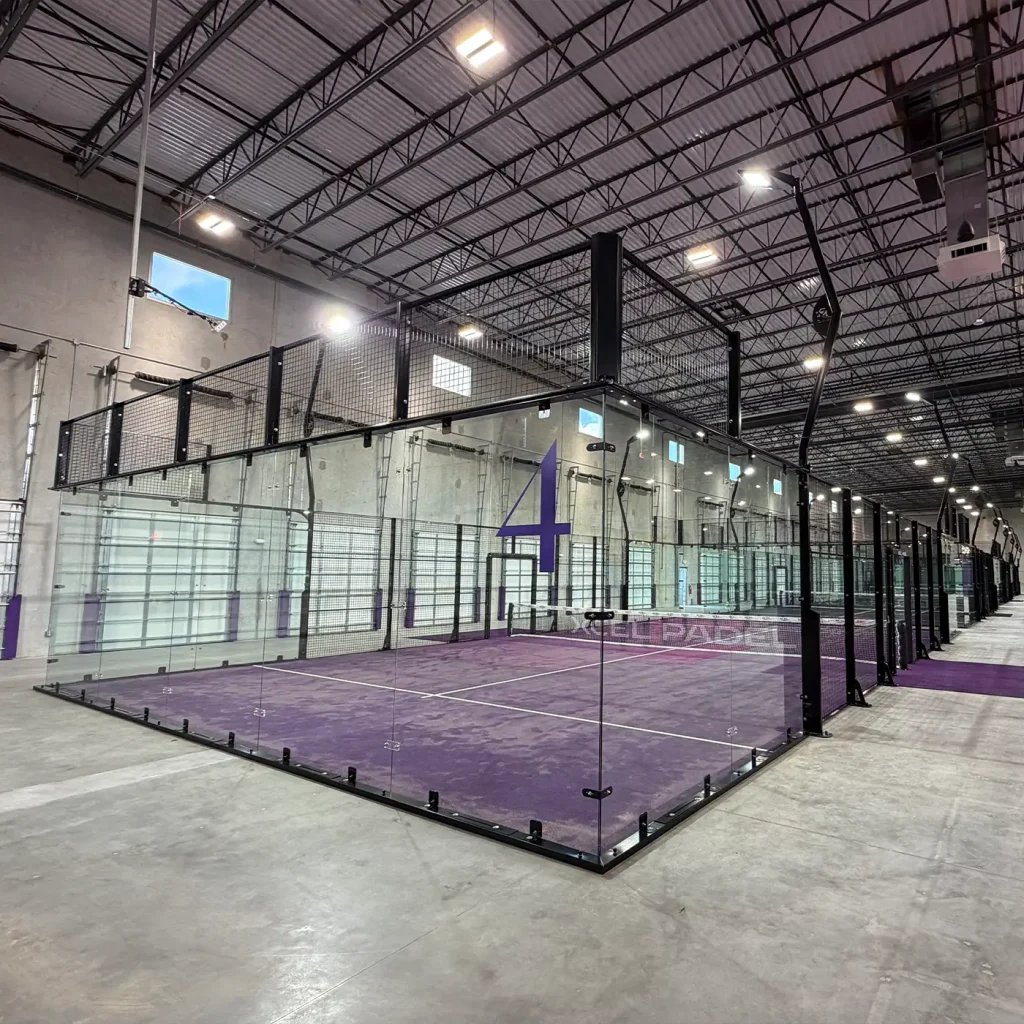
How Much Does a Padel Court Cost?
If you’re planning a new padel facility, one of the first questions you’ll ask is simple:
How much does a padel court cost?
The short answer is that there’s no single price. A padel court project includes much more than the steel frame and glass walls. Site conditions, court style, installation, shipping, lighting, accessories, and local construction costs all affect the final investment.
Understanding where your budget goes helps you compare quotes fairly and avoid unexpected costs later.
This guide explains what affects padel court pricing, what expenses many buyers overlook, and how to build a realistic budget for your project.
What Does a Padel Court Cost?
The total investment depends on the complete project rather than the court alone.
Typical costs include:
- The padel court system
- Shipping
- Site preparation
- Concrete foundation
- Installation
- Lighting
- Artificial turf
- Net system
- Permits
- Fencing or surrounding improvements
- Drainage, if required
Many first-time buyers focus only on the advertised court price. In reality, the installed project cost is usually much higher because the court is only one part of the construction process.
Sportsfield Specialties works with owners, architects, contractors, schools, clubs, and municipalities to help define project scope early so budgets better reflect actual construction costs.
What Factors Affect Padel Court Cost?
Several variables influence pricing.
Court Style
Different court models use different amounts of steel, glass, and structural engineering.
Examples include:
- Standard competition courts
- Panoramic courts
- Full panoramic courts
- Indoor courts
- Outdoor courts
Full panoramic courts generally require larger glass panels and more specialized engineering. They’re popular for professional venues and facilities that want unobstructed viewing.
Indoor courts often eliminate weather-related considerations but may require coordination with an existing building structure.
Outdoor courts typically require additional corrosion protection, drainage planning, and wind load engineering.
Sportsfield Specialties offers multiple court configurations so owners can select a solution that matches both their budget and their long-term goals.
Quality of Materials
Not every court is built the same.
Higher-quality manufacturers typically use:
- Heavy-duty structural steel
- Precision welding
- Durable powder coating
- Tempered safety glass
- Professional-grade artificial turf
- High-quality hardware
These components help improve durability, appearance, and long-term maintenance requirements.
Lower-cost systems may save money initially but can increase maintenance or replacement costs over time.
Foundation Requirements
Every court needs a stable foundation. The foundation is usually built by a local contractor and often represents a significant portion of the total project budget.
Factors affecting foundation cost include:
- Soil conditions
- Excavation
- Drainage
- Concrete thickness
- Frost depth
- Local labor costs
An experienced manufacturer can provide foundation drawings that help contractors build the slab correctly before installation begins.
Sportsfield Specialties supplies detailed technical documentation that supports contractors during construction.
Shipping
Padel courts are large, heavy structures.
Shipping costs depend on:
- Delivery distance
- Freight method
- International or domestic shipping
- Port access
- Jobsite accessibility
Projects in remote locations may require additional transportation planning. It’s worth asking suppliers exactly what’s included in their shipping quote.
Installation
Some owners hire their own installation crews. Others choose installation services coordinated through the manufacturer.
Installation costs depend on:
- Number of courts
- Site access
- Equipment availability
- Local labor
- Project complexity
Experienced installers help ensure:
- Glass alignment
- Proper tensioning
- Accurate dimensions
- Safe assembly
Correct installation protects the long-term performance of the court.
Optional Features That Affect Price
Many buyers customize their courts.
Popular upgrades include:
LED Lighting
High-quality LED sports lighting improves visibility and extends playing hours.
Lighting packages vary based on:
- Number of fixtures
- Mounting height
- Light levels
- Local electrical requirements
Court Padding
Facilities serving schools, recreation programs, or beginner players often add protective padding Sportsfield Specialties offers padel court padding designed specifically for compatible court systems. Padding can improve player safety while also creating sponsorship or branding opportunities.
Locking Gates
Facilities that limit access outside operating hours often install locking gates. This simple upgrade helps protect the court while allowing owners to control facility access. Sportsfield Specialties offers locking gate options that integrate with compatible court systems.
Custom Branding
Many clubs personalize their courts with:
- Club logos
- Sponsor graphics
- Custom colors
- Branded net posts
- Court signage
Branding can improve the overall appearance of the facility while creating sponsorship opportunities.
Hidden Costs Buyers Often Miss
Many projects exceed budget because certain costs weren’t included in the original estimate.
Common overlooked expenses include:
- Building permits
- Engineering review
- Survey work
- Electrical service
- Drainage improvements
- Equipment rental
- Landscaping
- Walkways
- Seating
- Court cleaning equipment
- Spare parts
- Ongoing maintenance
Building a complete budget from the beginning helps reduce surprises during construction.
Should You Choose the Lowest Quote?
Not necessarily. The lowest initial price doesn’t always represent the lowest lifetime cost.
When comparing suppliers, consider:
- Product quality
- Engineering
- Installation support
- Replacement parts
- Warranty
- Customer support
- Manufacturer experience
A well-built court often requires fewer repairs and delivers a better experience for players over many years.
Sportsfield Specialties works closely with customers throughout planning, design, delivery, and installation to help projects stay on schedule and meet long-term performance goals.
How to Build a Realistic Padel Court Budget
A simple budgeting process helps avoid surprises.
Step 1
Determine how many courts you plan to build.
Step 2
Choose the court style that matches your goals.
Step 3
Evaluate the site.
Look at:
- Available space
- Drainage
- Access
- Utilities
- Existing pavement
Step 4
Request a complete project quotation. Ask suppliers to identify what’s included and what’s not.
Step 5
Include contingency funds.
Unexpected site conditions can affect nearly every construction project. Planning for them reduces financial stress later.
Sportsfield Specialties helps buyers understand the full project scope early so planning decisions are based on realistic expectations rather than assumptions.
Ready to Start Planning?
Every padel project is different. The best way to estimate costs is to evaluate the site, define your goals, and work with an experienced manufacturer that can help identify every part of the project from the beginning.
Whether you’re building a private club, municipal facility, sports complex, school, or commercial venue, understanding the full cost of ownership helps you make better decisions before construction begins.
If you’re exploring a new project, Sportsfield Specialties can help you compare court options, understand available accessories, and identify the factors that will influence your overall investment.