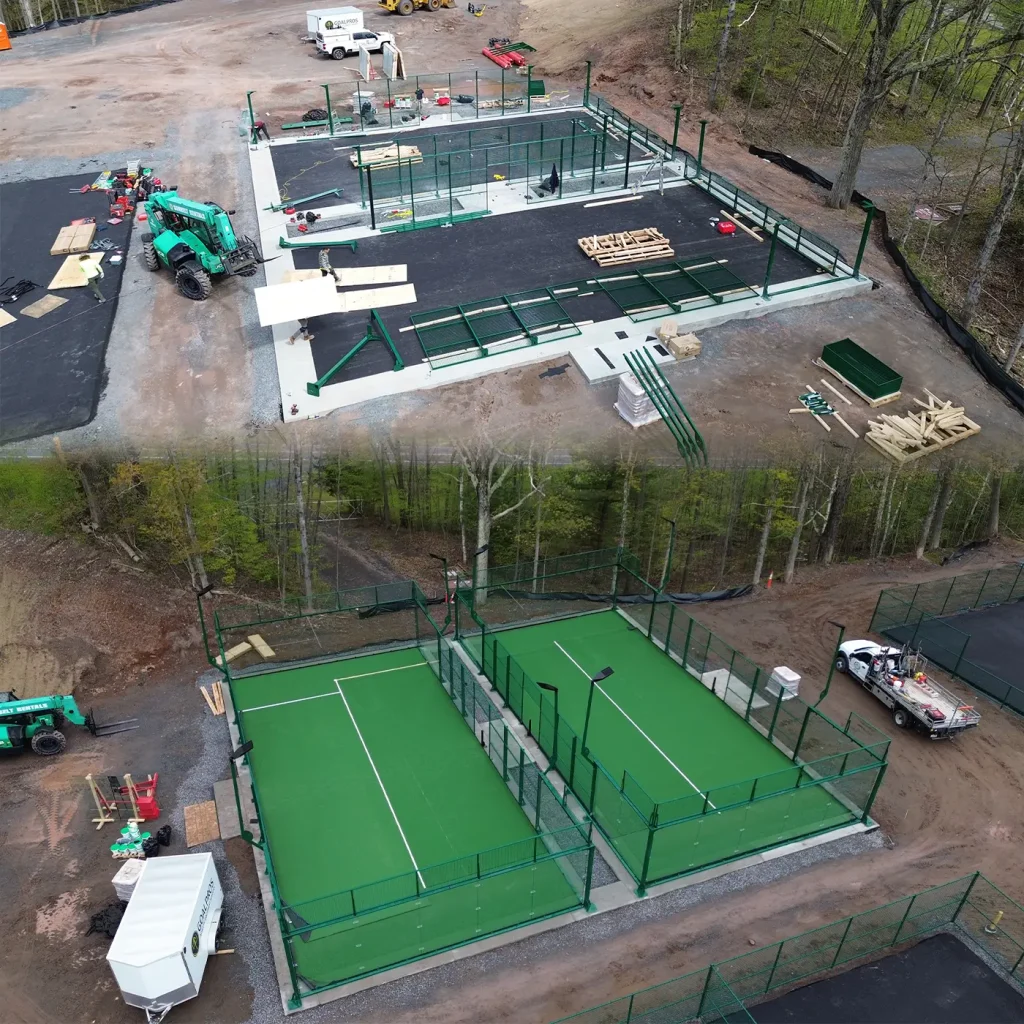
Installing a padel court is more than assembling steel, glass, and turf. A successful project includes planning, engineering, site preparation, construction, delivery, installation, and final inspections. Each step affects the overall schedule.
One of the first questions buyers ask is, “How long will it take before players can use the court?”
The answer depends on several factors, including the condition of the site, the number of courts being installed, local permitting requirements, weather, and construction schedules.
This guide explains each stage of a typical padel court installation so you know what to expect before your project begins.
The Short Answer
A typical padel court project usually takes several weeks to several months from initial planning to the first match.
The installation of the court itself may only take a few days, but that is only one part of the overall project.
A complete project often includes:
- Planning
- Site evaluation
- Engineering
- Permitting
- Foundation construction
- Delivery
- Court installation
- Lighting installation
- Final inspections
The timeline depends on how quickly each phase can be completed.
Phase 1: Planning the Project
Every successful installation starts with careful planning.
During this stage, you’ll typically:
- Define project goals
- Choose a court style
- Evaluate the site
- Establish a budget
- Select a manufacturer
- Coordinate with architects or contractors
Making decisions early helps prevent delays later in the project.
Sportsfield Specialties works with facility owners during the planning phase to help identify project requirements before construction begins.
Phase 2: Engineering and Permitting
Once the project scope is defined, engineering and permitting begin.
Depending on your location, this may include:
- Engineering reviews
- Building permits
- Local code compliance
- Site plans
- Foundation drawings
Permit review times vary by municipality. Starting this process early can help keep the overall project on schedule.
Sportsfield Specialties provides engineering documentation that supports contractors and design professionals throughout the approval process.
Phase 3: Site Preparation
Before the court arrives, the site must be prepared.
Typical work includes:
- Excavation
- Grading
- Utility installation
- Drainage improvements
- Concrete foundation construction
The foundation is one of the most important parts of the project. It must be completed accurately so the court can be installed according to the manufacturer’s specifications.
Outdoor projects may require additional drainage work depending on local soil and weather conditions.
Phase 4: Manufacturing and Delivery
While site work is underway, the court system is prepared for delivery.
Project schedules during this phase can be affected by:
- Manufacturing lead times
- Shipping schedules
- Customs clearance for international deliveries
- Transportation logistics
- Jobsite accessibility
Coordinating delivery with the construction schedule helps prevent materials from arriving too early or too late.
Sportsfield Specialties works with customers to coordinate delivery timing so installation can begin when the site is ready.
Phase 5: Court Installation
Once the foundation has cured and materials have arrived, installation begins.
The installation team assembles:
- Structural steel
- Tempered glass panels
- Gates
- Hardware
- Artificial turf
- Net system
Every component must be installed according to engineering specifications.
Proper alignment is essential for:
- Player safety
- Ball performance
- Structural stability
- Long-term durability
Experienced installers help ensure every part of the court is assembled correctly.
Sportsfield Specialties supports customers throughout the installation process with technical documentation and product expertise.
Phase 6: Lighting and Accessories
Many facilities complete additional work after the court structure is assembled.
This may include installing:
- LED sports lighting
- Court padding
- Locking gates
- Benches
- Branding
- Scoreboards
- Spectator seating
Completing these items before opening day creates a better experience for both players and visitors.
Sportsfield Specialties offers compatible accessories designed to integrate with its padel court systems.
Phase 7: Final Inspection
Before opening the court, perform a final walkthrough.
Check that:
- Glass panels are secure.
- Turf is properly installed.
- The net is correctly tensioned.
- Gates operate smoothly.
- Lighting functions properly.
- The court is clean and ready for play.
Addressing any final adjustments before opening helps ensure players enjoy the best possible experience from day one.
What Can Delay a Padel Court Installation?
Every construction project is different, but some delays are more common than others.
These include:
- Permit approvals
- Weather
- Unexpected soil conditions
- Utility conflicts
- Shipping delays
- Contractor scheduling
- Changes to the project scope
Planning ahead and maintaining regular communication with your project team can reduce the impact of these issues.
Sportsfield Specialties helps customers coordinate planning, engineering, and installation so projects stay organized from start to finish.
Tips for Keeping Your Project on Schedule
You can’t control every variable, but you can reduce delays by following a few best practices.
- Finalize your court selection early.
- Begin permitting as soon as possible.
- Complete site evaluations before construction starts.
- Coordinate delivery with your contractor.
- Keep communication open between the manufacturer, contractor, and project owner.
- Avoid making major design changes once construction is underway.
Good planning is often the biggest factor in keeping a project on schedule.
Installation Timeline Checklist
As your project moves forward, confirm you’ve completed each step:
- Define project goals.
- Select a court system.
- Evaluate the site.
- Complete engineering and permitting.
- Build the foundation.
- Schedule delivery.
- Install the court.
- Add lighting and accessories.
- Complete the final inspection.
- Open the court for play.
Following this sequence helps create a smoother installation and reduces the likelihood of unexpected delays.
Ready to Plan Your Installation?
A padel court installation is a coordinated construction project involving multiple teams and milestones. Understanding each phase helps you build a realistic schedule and prepare for a successful opening.
Sportsfield Specialties works with owners, architects, engineers, contractors, schools, clubs, and municipalities throughout the planning and installation process. From engineering documentation to product support, the goal is to help every project move efficiently from planning to play.