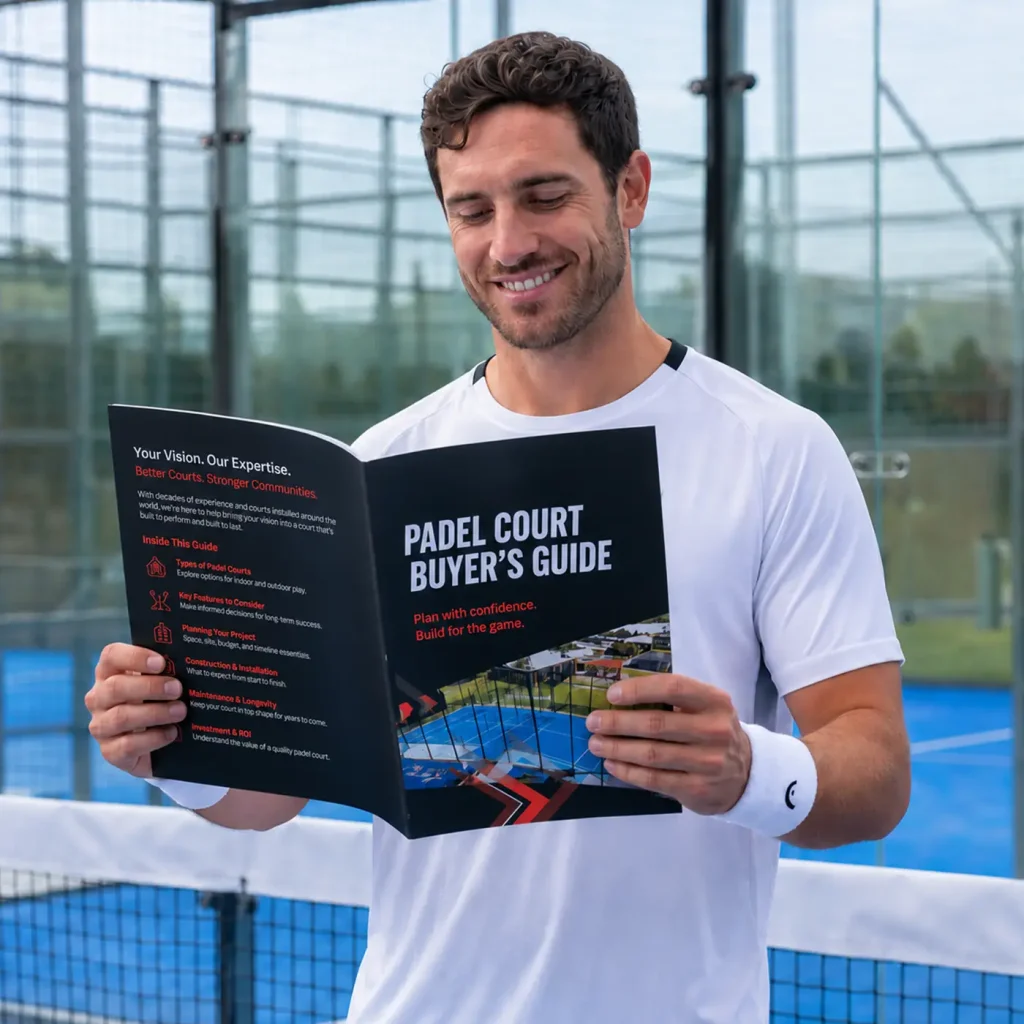
Buying a padel court is a major investment. The right court can attract players, create new revenue, and serve your facility for decades. The wrong decision can lead to higher maintenance costs, frustrated players, and expensive upgrades later. Whether you’re planning a single court at a private club or a multi-court commercial venue, it’s important to understand what separates one padel court from another. Not every court is built to the same standard, and not every project has the same requirements.
This buyer’s guide explains the key factors to consider before you buy a padel court. You’ll learn what questions to ask, what options are available, and what decisions have the biggest impact on long-term performance.
Sportsfield Specialties designs and manufactures PaDelhi™ Padel Court Systems for clubs, parks, schools, universities, and private facilities. Throughout this guide, we’ll share the factors experienced court buyers evaluate before making a purchasing decision.
What Should You Consider Before You Buy a Padel Court?
The first step isn’t choosing a court model. It’s understanding your project. Every installation starts with a few important questions:
- Who will use the court?
- Will it be indoors or outdoors?
- How many courts do you plan to build?
- Will you host tournaments?
- What climate will the court be installed in?
- What is your timeline and budget?
Answering these questions early helps narrow your options and prevents expensive changes later. For example, a private residential court has very different needs than a commercial club expecting thousands of annual players.
Sportsfield Specialties works with facilities of every size, helping owners match the right court system to their goals rather than selling a one-size-fits-all solution.
Types of Padel Courts
Not all padel courts look or perform the same. While every court follows the same basic rules and dimensions, the materials, design, and features can vary depending on where the court will be installed and how it will be used. Understanding these differences will help you compare your options and invest in a court that fits your facility’s goals instead of simply choosing the lowest-priced system.
Sportsfield Specialties offers the following courts:
Outdoor Panoramic Courts
Outdoor courts are designed to withstand changing weather while delivering professional play. High-quality steel construction, durable coatings, and engineered drainage all contribute to long-term performance.
These courts are ideal for:
- Parks
- Sports complexes
- Tennis clubs
- Resorts
- Municipal recreation facilities
Sportsfield Specialties offers PaDelhi™ Outdoor Panoramic Padel Courts that combine premium materials, U.S. engineering standards, and a clean, modern look for facilities that expect lasting quality.
Indoor Panoramic Courts
Indoor courts eliminate weather interruptions and allow year-round programming.
They’re popular with:
- Dedicated padel clubs
- Athletic facilities
- Multi-sport complexes
- Universities
PaDelhi™ Indoor Full Panoramic Padel Courts typically require different lighting, ceiling clearance, and structural planning than outdoor installations.
Specialty Configurations
Some facilities require custom layouts, branded finishes, or unique court arrangements that fit available space while maintaining proper play dimensions. Understanding these differences early helps narrow the buying process.
Choosing the Right Court Quality
The lowest-priced padel court isn’t always the best value. Saving money upfront can lead to higher costs later if the court requires frequent repairs, replacement parts, or unexpected maintenance. When comparing padel court systems, look beyond the initial price and consider the overall quality, expected lifespan, maintenance requirements, and warranty.
Important areas of a padel court to look at include:
- Steel frame quality
- Corrosion protection
- Tempered glass
- Artificial turf system
- Lighting compatibility
- Fasteners and hardware
- Manufacturing tolerances
- Certifications and testing
Every Sportsfield Specialties padel court is built with quality components that help keep the court looking and playing its best for years.
Understanding Padel Court Accessories
A padel court is more than the playing surface, glass, and fencing. The right accessories help complete the facility and can make a noticeable difference in how the court looks, functions, and is maintained.
Common accessories include:
- Court lighting
- Court padding
- Locking gates
- Nets and net posts
- Wind screens
- Benches
- Scoreboards
- Ball holders
For example, Sportsfield Specialties offers padel court entrance/exit and net post padding and locking gate systems designed to improve safety while maintaining a professional appearance.
Choosing compatible accessories during the initial purchase often simplifies installation and future maintenance.
Site Requirements Before Installation
A successful padel court project starts long before the court arrives. The installation site should be properly planned and prepared to support the court system and help avoid costly delays during construction. Taking the time to prepare the site helps keep your project on schedule and provides a solid foundation for years of reliable use.
A proper site evaluation typically includes:
- Available space
- Ground conditions
- Foundation requirements
- Drainage
- Utility access
- Equipment access
- Local permitting
- Wind and weather considerations
Planning these items early helps avoid delays during construction.
Manufacturers like Sportsfield Specialties often work alongside contractors, architects, and facility owners during planning to help identify site requirements before installation begins.
Understanding Installation Options
Installing a padel court is a coordinated construction project.
The process usually includes:
- Site preparation
- Foundation construction
- Court delivery
- Steel structure assembly
- Glass installation
- Turf installation
- Net installation
- Lighting installation
- Final inspection
Depending on the project, installation may be completed by experienced installation partners or coordinated with local contractors following manufacturer specifications. Understanding the installation process before purchasing helps establish realistic timelines.
What Affects the Cost to Buy a Padel Court?
There isn’t one standard price for every project.
Several factors influence total investment, including:
- Number of courts
- Indoor or outdoor installation
- Court model
- Foundation work
- Shipping
- Installation
- Lighting
- Accessories
- Site conditions
- Custom branding
Instead of focusing only on initial purchase price, many buyers evaluate total ownership costs over the life of the court. Higher-quality materials often reduce maintenance and replacement expenses over time.
Sportsfield Specialties helps customers evaluate complete project costs so there are fewer surprises during construction.
Choosing the Right Padel Court Manufacturer
The manufacturer you choose matters just as much as the court itself.
When comparing suppliers, consider:
- Industry experience
- Manufacturing quality
- Product warranties
- Engineering support
- Installation guidance
- Available accessories
- Replacement parts
- Customer service
Sportsfield Specialties has decades of experience designing sports facility equipment and works with customers throughout planning, manufacturing, delivery, and installation.
Questions to Ask Before You Buy a Padel Court
Before making a final decision, ask every supplier questions like:
- What materials are used?
- Is the steel protected against corrosion?
- What glass specifications are included?
- What turf system is recommended?
- What warranty is provided?
- What accessories are available?
- What installation support is included?
- Are replacement parts available?
- What maintenance is required?
- What projects have you completed?
Having clear answers makes it easier to compare suppliers beyond price alone.
Why Sportsfield Specialties?
Choosing a padel court manufacturer is about more than comparing specifications. You want a company that understands sports facilities, stands behind its products, and can help you make informed decisions from planning through installation. That’s where Sportsfield Specialties stands apart.
For decades, Sportsfield Specialties has been a trusted name in the sports construction industry, supplying equipment for schools, colleges, professional venues, municipalities, parks, and private sports facilities. We bring that same commitment to quality to our PaDelhi™ line of padel courts.
Sportsfield Specialties manufactures professional padel court systems along with accessories such as court padding and locking gates. The company works with clubs, schools, municipalities, universities, and commercial sports facilities to deliver courts designed for durability, safety, and long-term performance.
Whether you’re building your first court or expanding an existing facility, working with an experienced manufacturer like Sportsfield Specialties can make every stage of the project easier.
Ready to explore your options? Contact Sportsfield Specialties to discuss your project, compare court systems, and determine which solution best fits your facility.