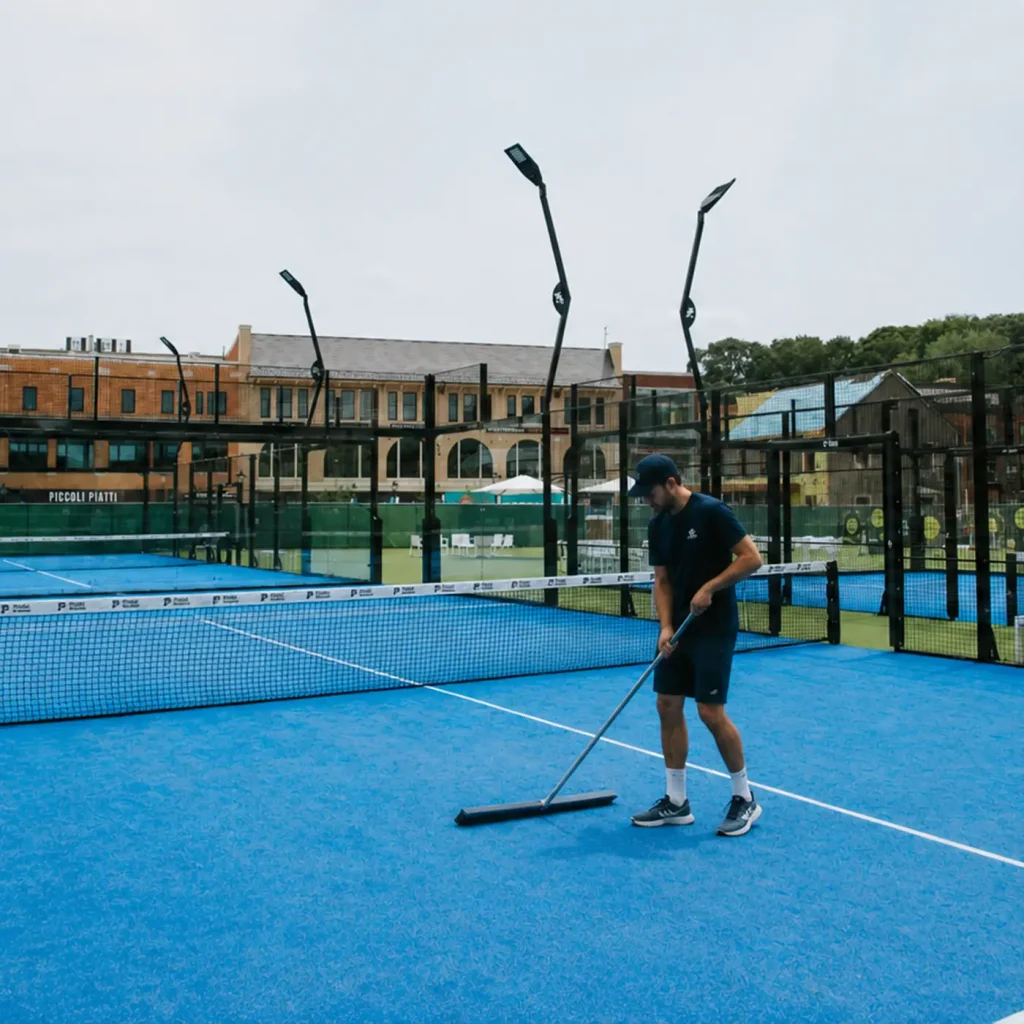
A clean padel court looks better, plays better, and lasts longer. Cleaning removes dirt, leaves, dust, and other debris that can affect the playing surface, reduce drainage performance, and hide damage that should be repaired. Regular cleaning also helps maintain a professional appearance and creates a better experience for players.
The good news is that most cleaning tasks are simple when they’re performed on a regular schedule.
This guide explains how to clean every major part of a padel court, what equipment you’ll need, and common cleaning mistakes to avoid.
Why Regular Cleaning Matters
Cleaning is one of the easiest forms of preventive maintenance.
When debris is allowed to build up, it can:
- Reduce drainage performance
- Wear down artificial turf
- Make glass difficult to see through
- Hide damaged hardware
- Create slippery playing conditions
- Increase long-term maintenance costs
Routine cleaning also makes inspections more effective because dirt and debris won’t hide developing problems.
Sportsfield Specialties recommends making cleaning part of every facility’s routine maintenance program instead of waiting until the court appears dirty.
What You’ll Need
Most facilities can clean a padel court using basic maintenance equipment.
Common supplies include:
- Leaf blower or soft broom
- Turf brush
- Non-abrasive glass cleaner
- Soft microfiber cloths
- Bucket and water
- Mild detergent when appropriate
- Trash container
- Inspection checklist
Avoid using equipment or cleaning products that could damage artificial turf, protective coatings, or tempered glass.
Step 1: Remove Loose Debris
Start by clearing anything sitting on the court surface.
Remove:
- Leaves
- Twigs
- Dirt
- Trash
- Loose balls
- Organic material
Pay special attention to the corners of the court and around drainage openings where debris often collects.
For outdoor courts, this step may need to be completed every day during the fall or after storms.
Step 2: Clean the Artificial Turf
Artificial turf should be cleaned gently to preserve the fibers and maintain consistent playing conditions.
Use a brush recommended by the turf manufacturer to:
- Lift turf fibers
- Redistribute infill
- Remove surface dirt
Brush evenly across the court rather than focusing only on high-traffic areas.
Remove surface stains
If stains appear, follow the turf manufacturer’s cleaning recommendations.
Avoid harsh chemicals that could damage the fibers or backing.
Inspect while cleaning
Cleaning is also a good time to look for:
- Worn fibers
- Loose seams
- Uneven infill
- Surface damage
Addressing small issues early helps extend the life of the playing surface.
Step 3: Clean the Glass Panels
Clean glass improves visibility for players and spectators while making inspections easier.
Use the right products
Choose:
- Non-abrasive glass cleaner
- Soft microfiber cloths
- Soft squeegees if appropriate
Avoid abrasive pads or cleaners that may scratch the glass.
Clean systematically
Work from the top of each panel downward.
Pay extra attention to:
- Fingerprints
- Ball marks
- Water spots
- Dirt near the bottom of the panels
Sportsfield Specialties’ panoramic padel courts are designed to maximize visibility, making routine glass cleaning an important part of preserving both appearance and the player experience.
Step 4: Clean the Steel Structure
Steel components also benefit from routine cleaning.
Wipe away:
- Dirt
- Dust
- Mud
- Organic debris
Cleaning allows you to inspect protective coatings more easily.
While cleaning, check for:
- Rust
- Paint damage
- Loose hardware
- Corrosion
If you notice damaged coatings, schedule repairs before corrosion spreads.
Step 5: Clean Gates and Hardware
Gates are touched constantly throughout the day.
Inspect and clean:
- Hinges
- Handles
- Locks
- Latches
- Frames
Remove dirt that could interfere with smooth operation.
Sportsfield Specialties’ locking gate systems are designed for dependable performance, but routine cleaning and inspection help keep them operating reliably.
Step 6: Clear Drainage Areas
Drainage is often overlooked during routine cleaning.
Inspect and remove:
- Leaves
- Dirt
- Grass clippings
- Mulch
- Other debris
After cleaning, verify that water can move freely through the drainage system.
Outdoor courts should receive additional drainage inspections after heavy storms.
Step 7: Clean Court Accessories
Don’t forget the accessories that support the court.
Clean and inspect:
- Court padding
- Benches
- Windscreens
- Signage
- Scoreboards
- Waste receptacles
Court padding should also be inspected for tears, fading, or loose attachment points.
Keeping accessories clean helps maintain a professional appearance throughout the facility.
Common Cleaning Mistakes
Avoid these common mistakes:
- Waiting until the court looks dirty before cleaning
- Using abrasive cleaning products on glass
- Ignoring drainage areas
- Skipping routine turf brushing
- Allowing debris to remain after storms
- Forgetting to inspect the court while cleaning
Cleaning and inspections should always work together.
How Often Should You Clean a Padel Court?
The right schedule depends on court usage, weather, and location.
As a general guide:
| Court Component | Recommended Cleaning Frequency |
| Playing surface | Daily or as needed |
| Glass panels | Weekly |
| Gates | Weekly |
| Drainage areas | Weekly and after storms |
| Steel structure | Monthly |
| Court accessories | Monthly |
| Deep cleaning | At least annually |
Facilities with heavy daily use may need more frequent cleaning.
Build Cleaning Into Your Maintenance Routine
Cleaning is one of the simplest ways to protect a padel court.
Removing debris, brushing the artificial turf, washing glass panels, clearing drainage, and inspecting the court during every cleaning session helps prevent small issues from becoming larger repairs.
Sportsfield Specialties designs panoramic padel court systems, locking gates, court padding, and other accessories for long-term durability. Pairing quality equipment with a consistent cleaning routine helps facilities maintain attractive, safe, and reliable courts throughout the year.