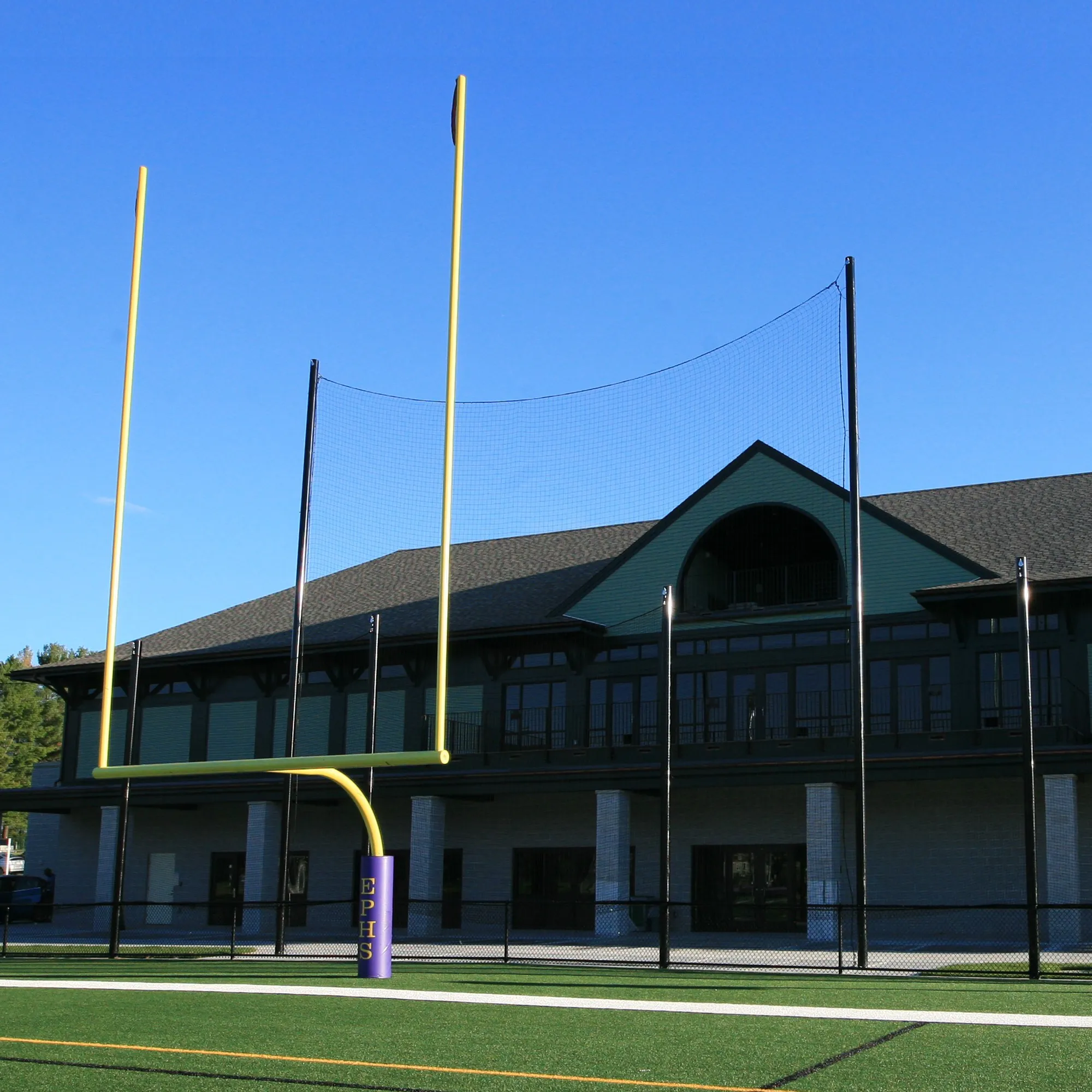
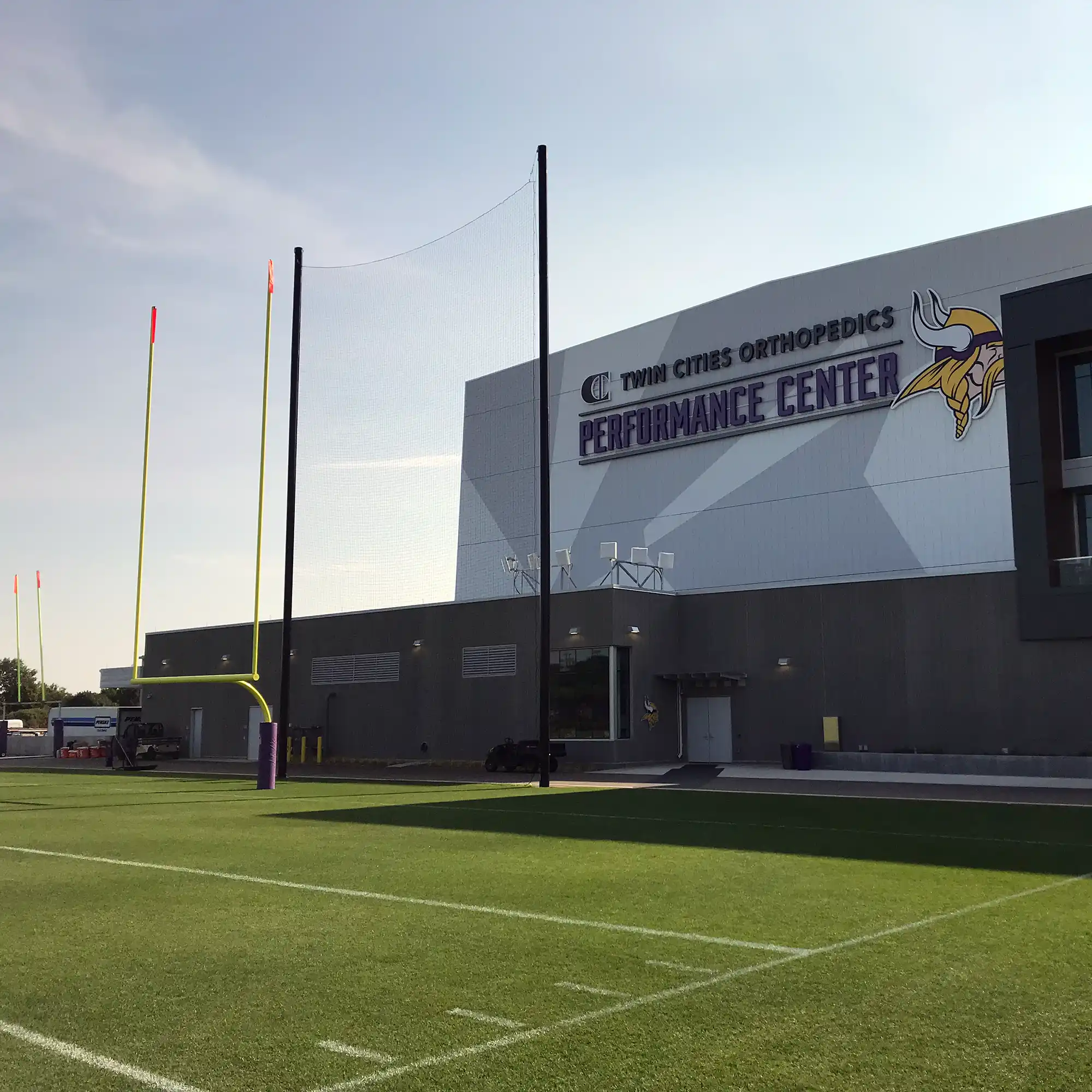
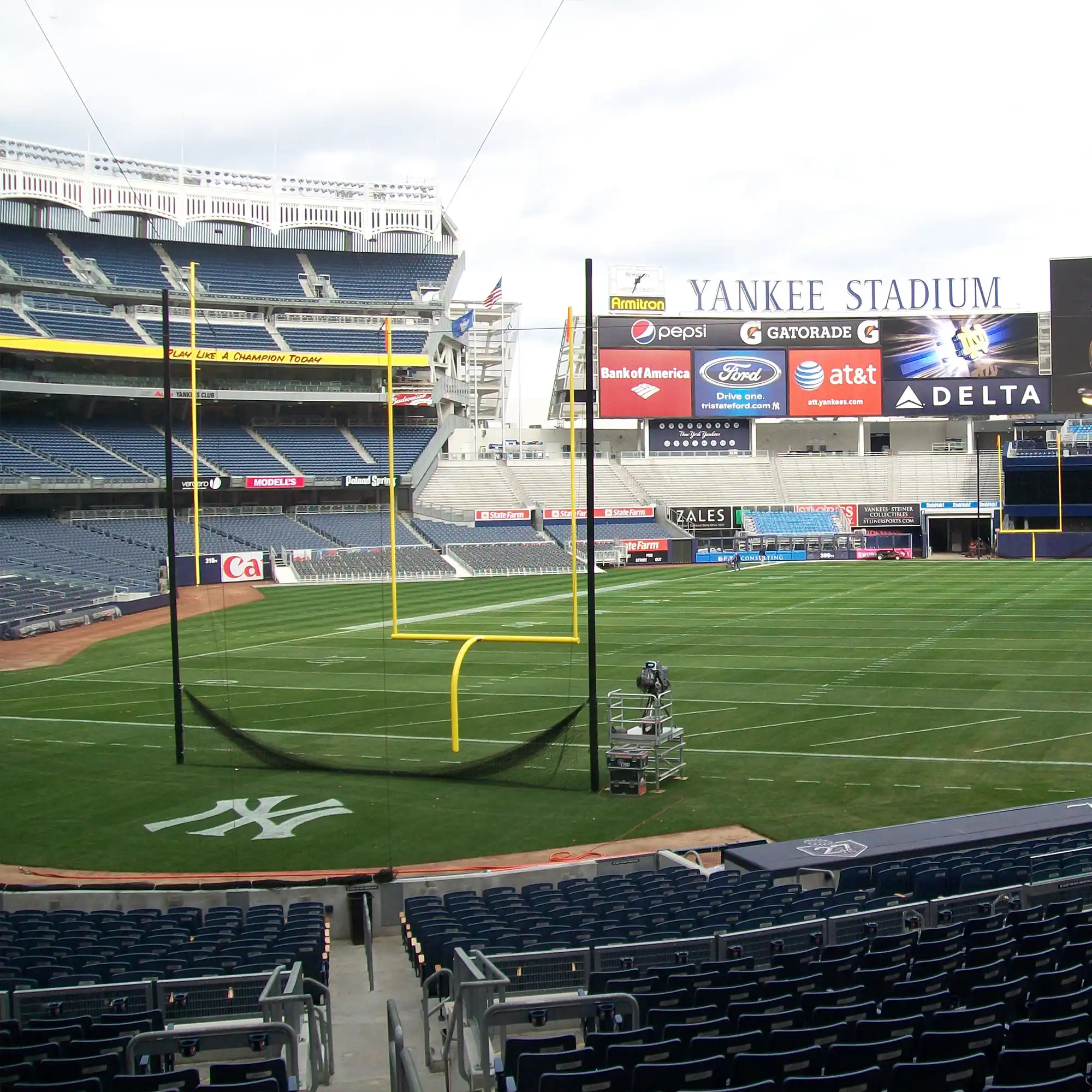
Football Backstop Netting Systems
- Industry leading provider of protective netting solutions
- Designed for football applications to catch field goals & PATs
- 40′ to 60′ spacing prevents poles from entering kicker’s line of sight
- Black super durable powder coated steel poles with ground sleeves
- Black 4″ square mesh net with sewn perimeter binding
- Easily raise and lower net via pulley and vertical slide cable system
Product Description
Footballs kicked during field goal and extra point practice can travel well beyond the goal posts. Football backstop netting systems help contain kicked footballs behind the uprights, making practices more efficient while helping protect spectators, nearby property, and surrounding athletic areas.
Sportsfield Specialties football backstop netting systems are designed for football stadiums, practice fields, schools, colleges, universities, parks, recreation departments, and professional training facilities. Our football backstop netting provides dependable ball containment behind football goal posts, helping reduce retrieval time while creating a safer and more organized practice environment.
Built for long-term durability, these football netting systems are designed to withstand repeated impacts from footballs throughout practices and games. Available in custom sizes and configurations, our systems can be tailored to match the layout and performance needs of your football facility.
Football backstop netting systems are part of Sportsfield Specialties’ complete line of football field equipment. Pair them with our football goal posts, football goal post padding, tension football safety netting systems, hanging football netting systems, scoreboard netting systems, multi-sport netting systems, and Ultra Cross® knotless netting to create a complete football facility built for player development, facility protection, and long-term performance.
Whether you’re planning a new football complex or upgrading an existing field, our team can help you choose the right Football Backstop Netting System for your project. Contact Sportsfield Specialties to request a quote or learn more about our complete line of football netting and athletic facility solutions.
Product Documentation
FSNS63040 - Football backstop netting system, 30’H x 40’W
FSNS64040 - Football backstop netting system, 40’H x 40’W
FSNS64050 - Football backstop netting system, 40’H x 50’W
FSNS64540 - Football backstop netting system, 45’H x 40’W
FSNS64550 - Football backstop netting system, 45’H x 50’W
FSNS85040 - Football backstop netting system, 50’H x 40’W
FSNS85050 - Football backstop netting system, 50’H x 50’W
FSNS106040 - Football backstop netting system, 60’H x 40’W
FSNS106050 - Football backstop netting system, 60’H x 50’W
FSNS106060 - Football backstop netting system, 60’H x 60’W
Frequently Asked Questions
Where should a football backstop netting system be installed?
Sportsfield Specialties football backstop netting systems are typically installed behind goalposts at the end of the field. Placement depends on facility layout, surrounding infrastructure, and safety considerations, with systems designed to integrate into stadiums, practice fields, and multi-use complexes.
What makes a backstop netting system different from other football netting options?
Backstop netting systems from Sportsfield Specialties are specifically engineered to provide vertical ball containment behind the goal area. Unlike sideline or overhead systems, they focus on capturing missed kicks and long passes, helping facilities maintain safer and more controlled environments.
Can Sportsfield football backstop netting systems be customized?
Yes. Sportsfield Specialties specializes in custom-engineered solutions. Backstop netting systems can be tailored to meet specific height, width, and structural requirements, ensuring the system fits seamlessly within your facility design.
Are these systems suitable for both stadiums and practice fields?
Yes. Sportsfield Specialties football backstop netting systems are used in a wide range of environments, from high school practice fields to collegiate and professional stadiums. Their design supports consistent performance regardless of the level of play.
Do football backstop netting systems require professional installation?
Due to their size and structural requirements, most facilities choose professional installation. Sportsfield Specialties provides guidance and support to ensure proper setup, helping maximize performance and safety.
How do backstop netting systems improve safety at football facilities?
By containing footballs within the field of play, Sportsfield Specialties backstop systems help protect spectators, nearby buildings, and parked vehicles. This is especially important for facilities located near high-traffic areas or shared-use spaces.